What is the PU text meaning?
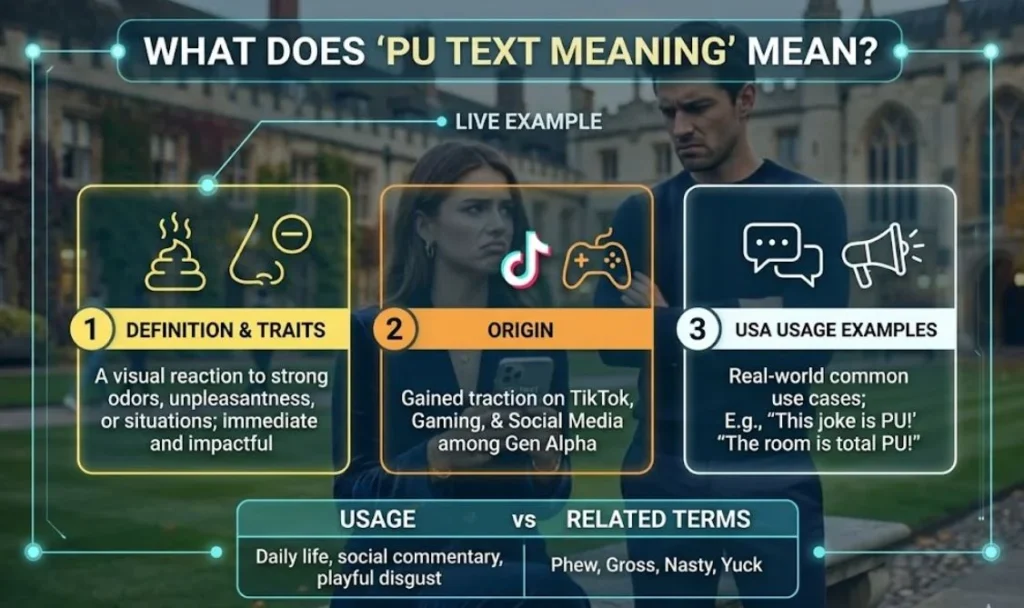
The pu text meaning refers to a popular digital slang term used in text messages and social media to express that something stinks, is gross, or carries an unpleasant vibe. It translates the real-world vocal exclamation of physical disgust into a quick, two-letter text response.
Why do people use this slang in digital communication?
Soft Critique: The expression serves as a lighthearted, conversational rejection that vents negative reactions without escalating social tension.
Instant Expressiveness: It acts as a digital wrinkled nose, allowing users to show immediate distaste without typing out long explanations.
Versatile Contexts: Beyond literal bad odors, it effectively describes a terrible opinion, a bad joke, or an unappealing plan.
Navigating the fast-moving waters of digital slang can feel like decoding a secret language, especially when a two-letter phrase suddenly takes over your social media feeds. If you have ever opened a text or scrolled through a comment section only to find a simple “PU,” you are not alone in wondering what it means. Digital communication moves at lightning speed, leaving many people searching for the exact context behind these short expressions. This guide breaks down the confusion, helping you understand how this quirky expression bridges the gap between real-world reactions and modern American texting culture.
PU – Quick Meaning
At its core, PU is the ultimate shorthand for structural or situational unpleasantness. It functions as a digital wrinkled nose, allowing the sender to show immediate distaste without typing out a long explanation.
- It signals literal bad smells or messy situations.
- It describes a terrible opinion, a bad joke, or an unappealing plan.
- It acts as a lighthearted, conversational rejection.
“Dude, your leftover tuna in the office fridge? PU!”
“That test was absolutely brutal, PU.”
“He wore those muddy shoes right onto the clean carpet… PU.”
Origin & Background
The expression dates back long before smartphones and social media. Historically, Americans have used the spoken exclamation “phew” or “P.U.” to react to a pungent odor. Linguists suggest it may have roots in the Latin word “putere,” which means to stink, or the Old English word “poh,” used to dismiss something unpleasant.
With the rise of platforms like TikTok and Instagram, the phrase found a second life among Gen Z and Gen Alpha. It evolved from a literal reaction to physical smells into a metaphorical tool for calling out “stinky” behavior or terrible situations.
The transition into text messaging happened naturally as users sought short, high-impact words to match the rapid pacing of online comment sections. Today, it stands as a staple of American digital culture, representing how traditional spoken idioms adapt to fit modern, screen-based interactions.
Real-Life Conversations
John: Did you check out the new seafood spot down the street?
Tony: Yeah, walked past it this morning and the dumpster was overflowing. PU!
Maya: He texted me at 3 AM asking if I was awake, and then blocked me when I didn’t reply.
Chloe: Wow, PU. You definitely dodged a bullet with that one.
Brandon: Are we still on for the outdoor basketball tournament today?
Derek: Man, it is pouring raining and the court is a total swamp. PU, let’s just stay inside.
Sarah: I accidentally spilled my entire vanilla latte right onto my new white keyboard.
Jessica: Oh no, PU! Hopefully the keys aren’t completely ruined.
Why is it Viral?
The word is trending across the USA because modern communication favors extreme brevity packed with emotional weight. In a fast-paced digital world, a two-letter word functions perfectly within short attention spans. It allows users to deliver a sharp, humorous critique without sounding overly mean or aggressive. American youth culture heavily emphasizes shared humor and relatable struggles, making a universal symbol for “this sucks” an easy addition to everyday internet vocabulary.
Emotional & Psychological Meaning
Using this slang reveals a lot about how people form bonds online. It expresses a shared sense of mild disgust, disappointment, or lighthearted disapproval. Instead of creating distance, it often fosters closeness by inviting the listener into an inside joke about an unpleasant reality.
I remember walking into a trendy, hyped-up pop-up clothing store with a friend last summer. The AC was broken, the prices were ridiculously high, and the music was deafening. My friend looked at the price tag of a basic t-shirt, leaned over, and whispered, “PU, let’s get out of here.” That single word perfectly captured our shared disappointment and immediately turned an annoying experience into a funny memory we still laugh about today.
Usage in Different Contexts
On social media platforms, you will see this term scattered across TikTok comment sections under videos of failed recipes, terrible fashion choices, or awkward public encounters. It serves as an instant rating system for content that fails the vibe check.
Among friends and romantic partners, the term is highly casual and frequently used to tease one another. It keeps the mood light, allowing someone to point out a flaw or an awkward moment without causing genuine offense or hurt feelings.
In professional or workplace environments, this slang is generally out of place. Sending it to a manager or a client can appear unprofessional and overly casual. However, you might see it used among close coworkers in a private message when complaining about a tedious task or a broken coffee machine.
The tone shifts dramatically based on punctuation. A simple “pu” feels dismissive and casual, while an all-caps “PU!!” emphasizes strong comedic shock or genuine physical revulsion.
When NOT to Use It
While highly versatile, this slang requires a bit of situational awareness. Avoid using it during serious discussions, moments of genuine grief, or when someone is sharing deep personal struggles. Using a playful term for disgust when a friend is venting about a major life crisis can make you seem unsympathetic and emotionally detached. Additionally, always ensure the recipient understands modern American text slang so your message doesn’t get confused for a typo or an incomplete thought.
Common Misunderstandings
The most frequent mistake people make is taking the word literally. When someone texts you “PU” after you explain a bad day at work, they do not think you actually smell bad. They are empathizing with your frustrating situation. Another point of confusion stems from pronunciation; it is pronounced as two distinct letters (“P-U”), not as a single blended sound. Mistaking the tone can lead to minor text arguments, which is why understanding the metaphorical side of the phrase is so important.
Slang Comparison
| Slang Term | Core Meaning | Intensity Level | Tone |
| PU | This stinks / Gross | Mild to Moderate | Playful, Casual |
| Gross | Unappealing / Nasty | Moderate | Direct, Experiential |
| Bruh | Disappointment / Shock | Mild | Neutral, Observational |
| Ew | Immediate revulsion | High | Sharp, Reactive |
| Lowkey bad | Subtly terrible | Mild | Analytical, Trendy |
Key Insight
While many slang terms focus purely on positive vibes or hype, this expression fills an important linguistic gap by giving users a soft, socially acceptable way to vent negative reactions without escalating tension.
Variations & Types
- PUUU: Extended for emphasis, showing major disgust or prolonged annoyance at a situation.
- Mega PU: Used when a situation is exceptionally terrible or completely unappealing.
- Literal PU: Specifically denotes a real, physical foul odor encountered in the environment.
- Situational PU: Refers to bad luck, an unfair rule, or an annoying turn of events.
- Vibe PU: Indicates that the energy or mood of a specific place or person feels completely off.
- Text PU: A quick, lazy acknowledgment of a boring or frustrating text message received.
- Aesthetic PU: Used to describe ugly design choices, terrible outfits, or messy rooms.
- Opinion PU: A sharp, casual dismissal of a bad take, terrible sports prediction, or awful movie review.
How to Respond When Someone Uses It
Casual Replies
“I know right? Total disaster.”
“Honestly, same. It’s so bad.”
Funny Replies
“Don’t worry, I’ll go take a shower now!”
“Hey, my bad takes are an acquired taste!”
Mature Replies
“Yeah, it definitely wasn’t the best outcome, but we move on.”
“It is a tough situation, hopefully it gets sorted out soon.”
Respectful Replies
“I completely understand why you feel that way about it.”
“That makes total sense, thanks for being honest.”
Regional & Cultural Usage
In Western culture, particularly across the United States, the phrase relies heavily on its historical connection to spoken English idioms. It is deeply embedded in both coastal and midwestern digital spaces.
In contrast, global internet spaces adopt the phrase purely through exposure to American media, gaming streams, and viral video platforms.
Younger generations globally use it seamlessly, while older generations like Millennials or Baby Boomers might only recognize it when spoken aloud rather than typed in a chat box. To explore more about how modern phrases evolve across global digital spaces, check out the linguistic trends analyzed on Wordyex, which tracks shifting internet behaviors.
For a broader look at how modern idioms adapt over time, the Linguistic Society of America offers extensive resources on language evolution.
Is It Safe for Kids?
Yes, this term is entirely safe for children and teenagers. It contains no vulgarity, offensive themes, or inappropriate undertones. It is a clean, universally understood piece of humor that kids use to describe everything from a messy bedroom to a tough math homework assignment.
Frequently Asked Questions
What does PU stand for in a text message?
In a text, it does not stand for an acronym. Instead, it is a phonetic spelling of the spoken exclamation “P.U.”, which people use to react to a bad smell or a terrible situation.
Is PU an insult when used in group chats?
Not necessarily. While it means something is bad or unappealing, it is usually used in a lighthearted, teasing manner rather than as a harsh or malicious insult.
How do you pronounce PU slang?
You pronounce it by saying the names of the two letters individually: “P” followed by “U”.
Can you use PU in a professional email?
It is best to avoid it in professional emails. The term is highly casual and suited for friends, family, and social media rather than formal workplace communication.
Why do people type PUUU with multiple U’s?
Adding extra letters at the end of a slang word stretches out the sound, mimicking a real-life vocal groan to show a higher level of exaggeration or disgust.
Final Thought
Language is a living, breathing reflection of how we connect, and terms like PU showcase our ability to bring human emotion into cold, digital screens.
It reminds us that text messaging does not have to be rigid or formal; it can be colorful, expressive, and deeply relatable.
The next time you encounter a terrible situation, a messy room, or a truly awful joke, do not hesitate to drop a quick “PU” into the chat to keep the conversation lively, authentic, and delightfully human.