RCS stands for Rich Communication Services, a modern mobile protocol upgrading legacy SMS.
what does rcs mean in text?
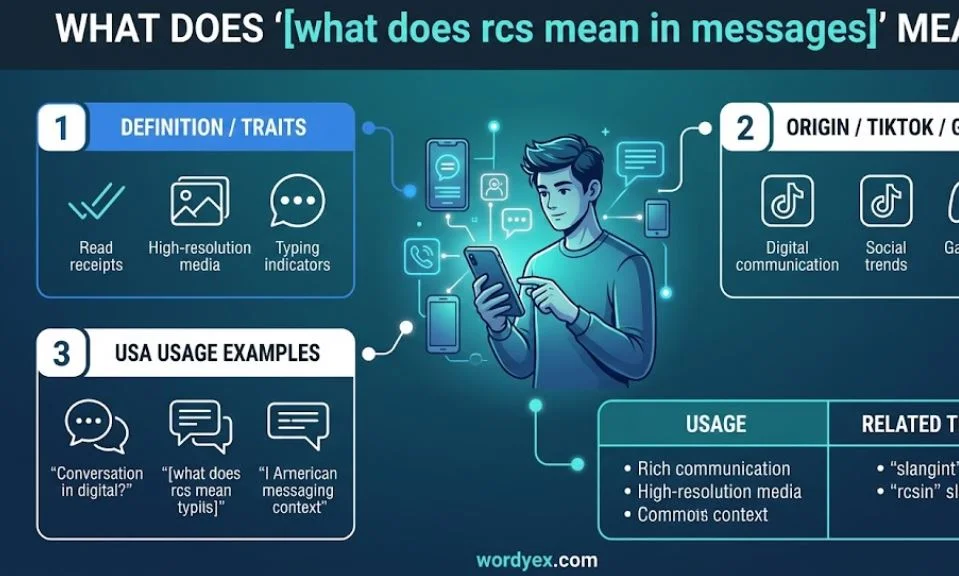
It means enjoying high-resolution photo sharing, live typing indicators, read receipts, and Wi-Fi texting directly within your smartphone’s default text app.
Why use RCS messaging on modern smartphones?
- Universal Cross-Platform Texting: Seamlessly connects Android and iPhone users across US cellular networks with crisp, uncompressed media sharing.
- Modern SMS Upgrade: Uses Wi-Fi and mobile data to send messages without character limits or standard text network delays.
- Interactive Chat Features: Delivers real-time typing bubbles, delivery status updates, customizable group threads, and end-to-end security encryption.
What Does what does rcs mean in messages Mean? RCS Slang Meaning & Origin
What Does RCS Mean?
RCS stands for Rich Communication Services, a modern texting standard that upgrades traditional SMS with features like read receipts, typing bubbles, high-resolution photo sharing, and Wi-Fi messaging. It transforms basic native texting into an interactive chat experience without requiring third-party messaging applications.
Have you ever looked at your phone screen while texting someone on a completely different phone brand and suddenly noticed typing dots, high-resolution photo attachments, or a subtle label reading “RCS message” in your chat bar? If you wondered whether RCS was a new internet acronym, a hidden setting, or a fresh piece of slang, you are certainly not alone. Millions of smartphone owners across the United States notice this icon popping up in their daily text conversations and immediately turn to search engines to make sense of it.
Understanding what RCS means clears up the longstanding confusion surrounding mobile texting ecosystems. For years, texting across different operating systems felt frustratingly limited, often resulting in pixelated videos, missing read confirmations, and broken group chat threads. RCS solves those daily headaches by quietly modernizing default text applications into high-speed, feature-rich messaging platforms.
what does rcs mean in messages – Quick Meaning
At its core, RCS is the upgraded technological standard meant to replace standard SMS (Short Message Service) and MMS (Multimedia Messaging Service). It allows default texting apps on modern devices to operate like advanced internet messaging software.
- Full Term: Rich Communication Services
- Primary Purpose: Modernized protocol enabling rich media and real-time status features over Wi-Fi or cellular data
- Key Features: Live typing indicators, high-definition photo/video delivery, read receipts, and expandable group chats
“Make sure your RCS is turned on so I can text you the full-resolution video from the concert last night.”
“My phone shows ‘RCS message’ in the draft box now instead of just saying regular SMS.”
“Our family group text isn’t blurry anymore now that everyone’s carrier supports RCS.”
Origin & Background
The technical foundations of RCS were originally introduced by the GSM Association back in 2008 to establish a unified, feature-packed standard for mobile phone networks worldwide. For many years, carrier adoption was notoriously slow, forcing millions of users to rely on standalone third-party chat platforms or device-exclusive messaging networks.
Google spearheaded widespread consumer adoption across North America by integrating RCS directly into the native Google Messages app on Android systems. The definitive turning point for everyday phone users arrived when Apple officially added support for the GSMA RCS Universal Profile to iOS. Today, cross-platform conversations between Android and iPhone users utilize RCS seamlessly, effectively closing a decade-old technological divide.
Social media discussions and trending online topics frequently highlight RCS because it completely changed everyday digital communication habits. People no longer have to request that friends send photos through external media apps just to preserve visual clarity.
Real-Life Conversations
Here is how real-life text conversations about RCS unfold across different digital platforms in the United States:
John A: Hey, did you get those event photos I sent over text?
Tony B: Yeah! They actually look crystal clear for once. Did your phone switch over to RCS?
John A: Yeah, my text bar says RCS message now. No more pixelated media clips!
Maya A: Why can I see typing dots while texting you today? You have an Android!
Chris B: Apple updated their system software to support RCS messaging! Now we get read receipts too.
Maya A: Finally! That makes planning group hangouts so much easier and faster.
David A: Are you able to text me while onboard the flight Wi-Fi?
Sarah B: Yes, RCS works over Wi-Fi networks, so my texts go through even without cell tower service.
David A: That is so convenient for staying in touch while traveling.
Ashley A: Why did our group chat turn into an RCS chat suddenly?
Brandon B: Everyone in the group finally updated their phone settings! Now we can name the group and see when people read messages.
Ashley A: Awesome, no more dropped text messages.
Why is it Viral?
RCS is trending heavily in American cultural discussions because it directly impacts everyday social relationships. For over a decade, daily texting conversations in the USA revolved around green versus blue bubbles, compressed video clips, and missing group chat functionality. When RCS became natively supported across all major smartphone operating systems and network carriers, it fundamentally changed how people talk to each other daily.
It is viral because it touches on a relatable digital frustration. Almost everyone has experienced the annoyance of receiving a 5-second video that appeared as a tiny, unwatchable box. RCS solved a universal daily nuisance, turning a technical protocol into a widely discussed topic across TikTok, online tech forums, and everyday group threads.
Emotional & Psychological Meaning
Beyond the technical code, RCS introduces an subtle psychological layer to modern texting. Live typing bubbles and instant read confirmations create a felt sense of active presence in everyday conversations.
When you see those three moving dots, it triggers immediate anticipation and real-time engagement. When a read receipt appears under your text, it provides instant confirmation or, depending on the situation, a subtle feeling of waiting for a response. RCS brings natural human pacing into raw text channels, making digital exchanges feel remarkably alive.
I recall sitting down with my mother to fix her messaging settings when her multi-generational family text thread kept dropping photo attachments. Once we enabled RCS on her standard texting app, her face lit up when she realized she could see high-resolution videos of her grandchildren instantly without needing to learn a new app. That small moment showed me that RCS is not just technical jargon; it genuine connection between people who care about each other.
Usage in Different Contexts
Understanding how RCS works across various settings helps keep your modern messaging habits sharp:
- Social Media & Online Forums: Mentioned when sharing phone tips, explaining system updates, or discussing smartphone features.
- Friends & Relationships: Used casually when referring to high-quality picture sharing, visible typing dots, or smoother group plans.
- Work & Professional Settings: Exceptionally useful for sending clean photo evidence, PDFs, and fast project status updates directly through standard carrier lines.
- Casual vs. Serious Tone: RCS technology itself is neutral, but features like read receipts can add gravity to time-sensitive or personal conversations.
When NOT to Use It
While RCS significantly improves mobile messaging, there are specific situations where you might prefer to adjust your settings or exercise mindfulness:
- High-Privacy Situations: If you prefer absolute boundaries regarding when you view a message, consider turning off read receipts in your chat settings.
- Limited Cellular Data Plans: Sending massive high-definition video files via RCS over mobile data can quickly consume monthly data allowances if Wi-Fi is unavailable.
- Workplace Boundaries: Keeping active typing indicators on during late hours might create unintended pressure to reply to work colleagues instantly.
To explore more insights about modern digital communication terms, feel free to visit our comprehensive guide on trending texting slang to stay completely up to date. For additional technical details regarding networking standards, you can review the official GSMA RCS Standards Documentation.
Common Misunderstandings
- It is not a standalone app: RCS is a underlying network protocol built into your phone’s default text app, not a separate application you download from an app store.
- It is not internet slang: Unlike shorthand terms like “BRB” or “TBH”, RCS is a technical standard term that appears in system settings and text bars.
- It does not charge extra fees: RCS operates using your standard Wi-Fi or smartphone internet data plan rather than charging standalone multimedia SMS fees.
Comparison Table
| Feature / Standard | Main Focus | Core Capabilities | Primary Usage Context |
| RCS | Modern universal text standard | High-res media, live typing, Wi-Fi texting | Built-in phone text applications |
| SMS | Legacy text protocol | Plain text, 160-character limit | Fallback cellular network texting |
| MMS | Legacy media protocol | Compressed images, basic group threads | Traditional cellular picture texts |
| iMessage | Proprietary platform protocol | Apple ecosystem rich features | Exclusive Apple device messaging |
Key Insight
RCS effectively bridges the long-standing divide between traditional text messaging and modern internet chat apps, bringing rich interactive features straight to your phone’s built-in text inbox.
Variations / Types
Here are the primary terms and feature variations tied to RCS messaging:
- RCS Chat: The operational state when an active RCS connection exists between sender and receiver.
- RCS Universal Profile: The standardized global specification established by the GSMA for cross-platform compatibility.
- RCS Business Messaging: Official corporate channels used by verified brands for sending appointment reminders and updates.
- Typing Indicators: Visual animated dots showing that the other party is actively writing a text response.
- Read Receipts: Status markers letting senders know exactly when a text message has been opened.
- High-Res Media Sharing: Transmitting original-quality photos and long video clips without heavy compression.
- Wi-Fi Messaging: Sending rich texts over wireless internet networks without relying on cell tower reception.
- Group Chat Controls: Adding, removing, or naming participants within multi-person text groups effortlessly.
- End-to-End Encryption: Enhanced security protocols applied to modern RCS chats for encrypted user privacy.
How to Respond When Someone Uses It
If a friend or colleague brings up RCS in conversation, here are several natural ways to reply based on the situation:
- Casual: “Yeah, I noticed my texts switched over! It is so nice finally getting full-resolution photos without asking for an email.”
- Funny: “Finally, no more sending videos that look like they were recorded on a toaster!”
- Mature: “It definitely makes organizing our team projects much easier now that file sharing works cleanly across all devices.”
- Respectful: “Thanks for mentioning that. I will double-check my settings to ensure my RCS features are turned on properly.”
Regional & Cultural Usage
- Western Culture (USA & Canada): RCS has become a widely discussed topic due to the high volume of cross-platform texting between Android and iPhone users nationwide.
- Global Internet Usage: In countries where third-party messaging apps dominate daily social communication, RCS acts as a powerful, built-in standard for native phone connectivity and secure business updates.
- Generational Differences: Gen Z and Millennials expect instant feedback features like typing indicators and clear media sharing by default. RCS brings standard native texting up to those modern expectations.
Is It Safe for Kids?
Yes, RCS is safe for younger users. It is simply an updated system standard for native text messaging provided by major phone carriers and operating systems. Parents can easily manage privacy preferences—such as turning off read receipts or location sharing features—directly within the native text app settings on their child’s phone.
FAQs
What does RCS stand for in text messages?
RCS stands for Rich Communication Services. It is a modern texting protocol that upgrades basic SMS with features like read receipts, typing bubbles, and high-definition photo sharing.
How do I know if I am using RCS?
Open your regular texting app. When drafting a message to someone who also has RCS turned on, the text box will usually say “RCS message” instead of “Text message.”
Is RCS free to use?
RCS uses Wi-Fi or cellular data from your existing internet plan. Mobile carriers do not charge additional per-message fees for sending RCS texts.
Can Android and iPhone users use RCS together?
Yes. Current smartphone operating systems support the RCS Universal Profile, allowing Android and iPhone users to enjoy typing indicators, read receipts, and clear media sharing together.
What happens if RCS is temporarily unavailable?
If you lose your internet connection or text someone whose device does not support RCS, your text app automatically falls back to sending standard SMS or MMS messages.
Final Thought
Understanding what RCS means in your everyday messages helps you navigate modern smartphone features with complete confidence. It turns old-fashioned text messaging into a smooth, expressive experience without forcing you or your family to download extra chat apps. As mobile communication continues to advance, keeping RCS enabled ensures your daily texts remain fast, clear, and reliable.