What Does RCS Mean?
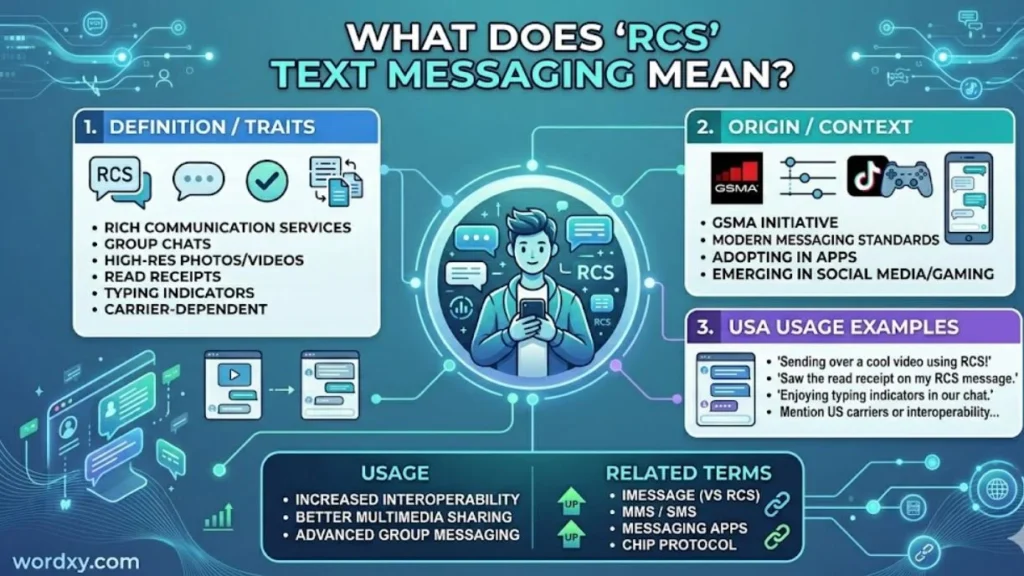
RCS stands for Rich Communication Services, a modern communication protocol that upgrades traditional SMS texting with features like high-res media sharing, typing indicators, and read receipts.
It is essentially the industry-standard “successor” to the basic green, bubble text, bringing iMessage-like functionality to all smartphones regardless of the operating system.
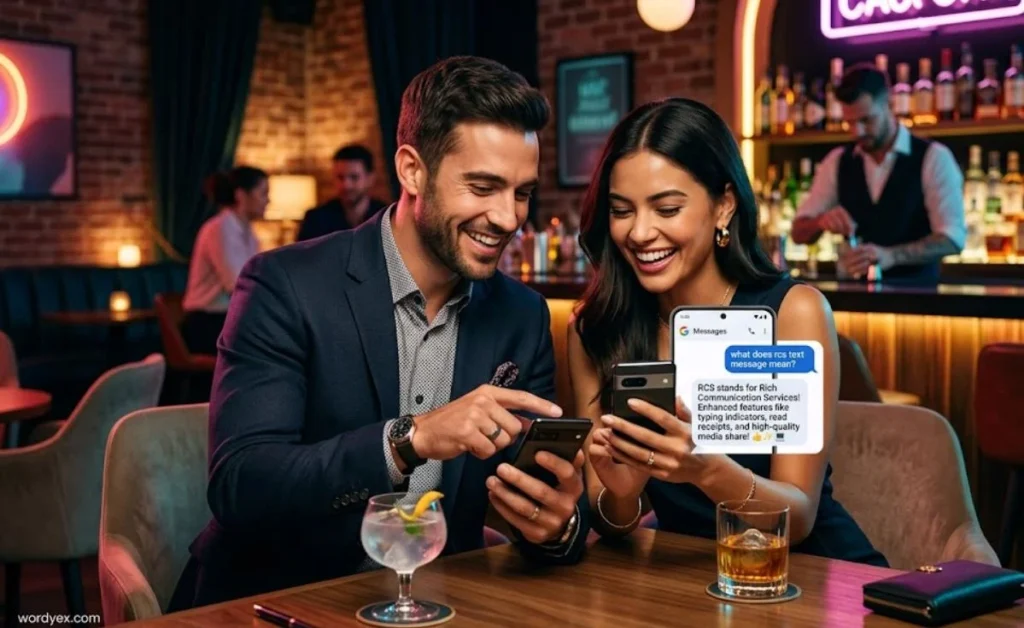
what does rcs text message mean
If you have ever felt the “green bubble” shame or struggled to send a high-quality video from an Android to an iPhone, you have felt the limitations of 1990s technology.
For decades, we relied on SMS and MMS—tech so old it belongs in a museum next to dial-up modems. People are searching for RCS today because the wall between different phone ecosystems is finally crumbling.
The confusion usually stems from a sudden change in how our messages look. You might see “RCS Message” in your text box instead of “Text Message,” or suddenly notice that your friend is typing.
We are at a turning point in digital communication where “just a text” is becoming a rich, interactive experience. Understanding RCS is about understanding how we stay connected in a world that demands instant, high-quality interaction.
RCS Text Message – Quick Meaning
At its core, RCS is the “Pro” version of texting. It uses your data or Wi-Fi connection rather than just a cellular signal to send messages.
- No more pixelated videos: Send 4K photos and files without them looking like they were shot on a toaster.
- Real-time feedback: You can see when someone is typing and when they have actually read your message.
- Group Chat Glory: Leave groups, name them, and add people without the whole thread breaking.
- No character limits: Write as much as you want without your message being split into five different parts.
“Yo, are we using RCS now? I can actually see your reactions!”
“The video you sent via RCS is so clear, finally no more MMS lag.”
“I love that RCS lets me text over the airplane Wi-Fi.”
Origin & Background
The journey of RCS didn’t start on TikTok or in a gaming lobby; it started in boardrooms back in 2007. However, it languished for years because carriers couldn’t agree on how to use it. It wasn’t until Google took the reins and later, in 2024 and 2025, when Apple agreed to support the standard, that it truly went viral in the cultural consciousness.
It evolved from a technical white paper into a social necessity. In the USA, the “Blue vs. Green” bubble war has been a genuine social phenomenon, influencing everything from dating habits to high school social circles. The cultural influence of RCS lies in its ability to bridge that gap.
It is the olive branch of the tech world, ending the era where your choice of hardware determined the quality of your friendships.
Real-Life Conversations
To see how RCS changes the vibe of a conversation, look at these daily scenarios.
Scenario 1: The Group Hangout
Chloe: Is everyone coming to the bonfire tonight?
Marcus: I’m in! (Sends a 4K video of the wood pile)
Chloe: Wow, that video actually looks good. RCS for the win!
Marcus: Right? No more blurry messes.
Scenario 2: The Concerned Friend
Sarah: Hey, are you okay? You haven’t replied.
Justin: (Typing bubble appears…)
Sarah: Oh, I see you typing. Never mind, I’ll wait!
Justin: Yeah, just got tied up at work. Heading home now.
Scenario 3: The Office Coordination
David: Can you send me that PDF of the floor plan?
Elena: Sending it now via RCS. It’s about 50MB so it might have failed on old SMS.
David: Got it instantly. Thanks for the high-res version.
Scenario 4: The Late Night Chat
Maya: Did you see that sunset?
Leo: No, send a pic!
Maya: (Sends a 100MB burst of photos)
Leo: (Reacts with a ❤️ emoji directly on the bubble)
Why is it Viral?
RCS is trending because it solves a universal pain point: communication friction. In American culture, we value seamlessness. We want our technology to “just work.” As more people realize they don’t need third-party apps like WhatsApp or Messenger to have a high-end experience, RCS is becoming the default way we talk. It’s viral because it represents the end of a long-standing frustration between iPhone and Android users.
Emotional & Psychological Meaning
Using RCS feels different than sending a “flat” SMS. There is an emotional weight to seeing those three bouncing dots when someone is typing. It creates a sense of “presence.” You aren’t just sending a letter into a void; you are engaged in a live, digital heartbeat.
It reveals our deep-seated need for validation and connection. Read receipts, while sometimes stressful, provide a psychological closure that SMS never could.
We use RCS because it makes digital communication feel more like a real-life conversation—fluid, visual, and responsive.
I remember once trying to send a video of my nephew’s first steps to my sister. Because I was on Android and she was on an iPhone, the video arrived as a blurry, unwatchable square.
It felt like a missed emotional connection. When we both switched to RCS-compatible updates, that barrier vanished. It wasn’t just about the tech; it was about sharing a moment without the “tech” getting in the way.
Usage in Different Contexts
On Social Media, RCS is often discussed as the “peace treaty” between tech giants. It’s a sign of status—showing that you’re updated and “in the know” about your phone’s capabilities.
In Friends & Relationships, it adds layers of intimacy. Being able to “react” to a message with a laugh or a heart emoji adds tone that plain text lacks. It prevents the dreaded “K” from feeling too cold when you can follow it up with a playful reaction.
In Work Settings, RCS is a lifesaver for sending documents or quick screenshots that need to be legible. However, it maintains a Casual Tone. While professional, it still feels more personal than an email. You should use it for quick updates but stick to official channels for formal contracts.
what does rcs text message mean
When NOT to Use It
While RCS is amazing, there are times to be careful. If you are communicating with someone in a region with very poor data infrastructure, RCS might hang while trying to send a large file. In these cases, your phone usually reverts to SMS, which is more “stable” for simple text.
Avoid using it if you are trying to be completely “invisible.” If you have read receipts and typing indicators on, you lose the privacy of reading a message and replying three hours later without the other person knowing. It requires a level of digital transparency that not everyone wants in every relationship.
Common Misunderstandings
The biggest myth is that RCS is an “app.” It’s not. It is a protocol built into your phone’s native messaging app. Another misconception is that it requires a subscription. It is free, though it does use a tiny bit of your data plan if you aren’t on Wi-Fi.
People often confuse RCS with encrypted apps like Signal. While RCS is becoming more secure, the level of end-to-end encryption can vary depending on the provider and the devices involved. It is much more secure than SMS, but it isn’t “spy-proof” yet in every single configuration.
Comparison Table
| Feature | SMS (Old Way) | RCS (New Way) |
| Media Quality | Low/Compressed | High/Original |
| Typing Indicators | No | Yes |
| Read Receipts | No | Yes |
| Group Chats | Basic/Glitchy | Advanced/Seamless |
| Internet Required | No (Cell only) | Yes (Data/Wi-Fi) |
| Character Limit | 160 Characters | Virtually Unlimited |
Key Insight: RCS essentially turns your phone’s default texting app into a powerhouse that rivals the best messaging apps in the world, making third-party downloads less necessary for the average user.
Variations & Types of RCS Features
- RCS Universal Profile: The global standard that makes different carriers work together.
- Chat Features: The common name Google uses for RCS in the Messages app.
- RCS Business Messaging (RBM): When companies send you branded, interactive messages like boarding passes.
- End-to-End Encryption (E2EE): The security layer that keeps your chats private.
- Rich Media: The ability to send GIFs, stickers, and high-res files.
- Cloud Storage: How some RCS messages are backed up for multi-device sync.
- Fallback SMS: The system that sends your message as a regular text if RCS fails.
- Group Management: The ability to boot people out of a chat or leave it yourself.
- Reaction Emoji: Long-pressing a message to add a heart, thumbs up, or laugh.
- Location Sharing: Sending your real-time pin directly in the chat window.
How to Respond When Someone Uses It
If someone sends you an RCS message with a high-res photo or a reaction, you don’t need to do anything special—your phone handles it!
- Casual: “Whoa, these photos are crisp! Love the new update.”
- Funny: “I see those typing bubbles… I know you’re writing a novel over there!”
- Mature: “I’ve sent the high-res documents via chat. Let me know if they came through clearly.”
- Respectful: “Thanks for the quick reaction to my message; glad we’re on the same page.”
Regional & Cultural Usage
In Western Culture, specifically the USA, RCS is the answer to the “Blue vs. Green” bubble debate. It is a massive relief for social groups that were previously divided by phone brands.
In Asian and Middle Eastern cultures, apps like WhatsApp, WeChat, and Telegram are already the kings of communication. RCS is viewed more as a backup or a way to receive official business notifications rather than the primary way friends talk.
Generational Differences: Gen Z and Gen Alpha are the most likely to notice RCS because they live in group chats. Millennials, who grew up with the struggle of T9 texting and limited SMS plans, view RCS as a luxury they never thought would be standard. For more on how we use language online, check out our guide to USA trending slang to see how digital culture is evolving.
Is It Safe for Kids?
RCS is generally as safe as regular texting. It doesn’t have the “public” discovery features of social media apps like TikTok. However, because it allows for easy file sharing, parents should ensure kids understand not to accept files or photos from unknown numbers. Most modern phones allow you to toggle RCS features off if you prefer a more restricted environment. For further technical safety, you can refer to official Google Communication Standards.
FAQs
What does it mean when it says ‘RCS message’ in my text box?
It means your phone has established a high-speed data connection with the recipient’s phone, allowing you to use advanced features like read receipts and high-quality media.
Is RCS free to use?
Yes, it does not cost extra on your phone bill. It uses your existing data plan or Wi-Fi connection, similar to how an app like iMessage or WhatsApp works.
Do I need a special app for RCS?
No. Most modern Android phones use “Google Messages” as the default app, which has RCS built-in. iPhone users receive RCS support through the native “Messages” app starting with newer iOS updates.
Can I turn RCS off?
Yes. In your messaging app settings, you can find a toggle for “Chat features” or “RCS messaging” and turn it off if you prefer the old-school SMS style.
Does RCS work between iPhone and Android?
As of 2024–2026, yes! Most major carriers and manufacturers have adopted the RCS Universal Profile, allowing the two systems to communicate with rich features for the first time.
Final Thought
RCS is more than just a technical upgrade; it’s a cultural shift toward a more connected and expressive digital world.
It takes the stress out of wondering if your message was delivered or if your video will look like a grainy mess. By embracing these “rich” features, we’re making our daily conversations a little more human, a little more visual, and a lot more reliable.
So, the next time you see those typing bubbles, enjoy the moment of connection—it’s the future of talking, right in the palm of your hand.