What Does IDM Mean?
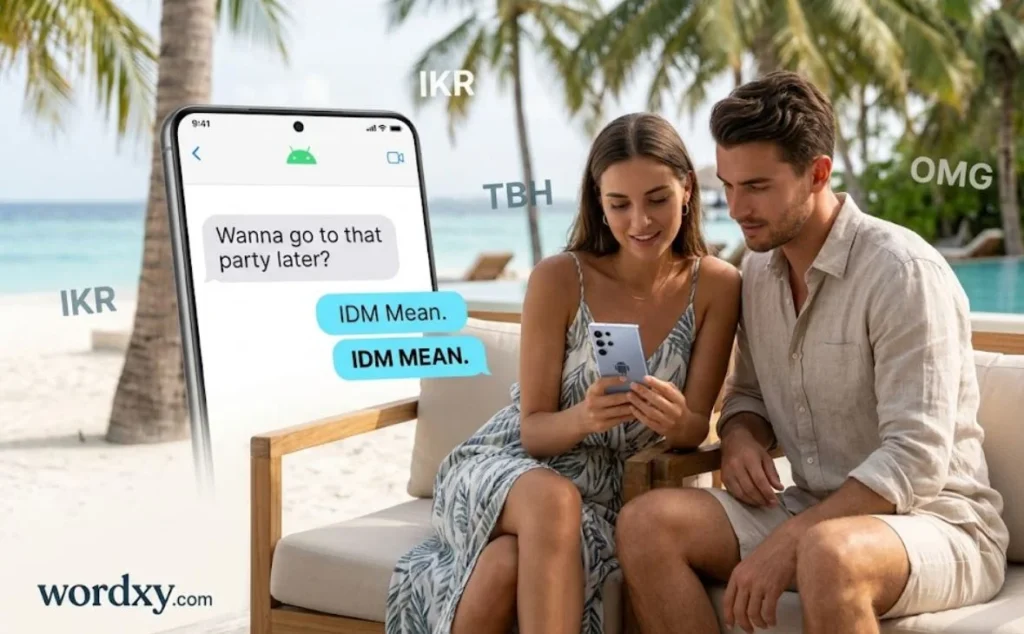
In modern digital communication, IDM most commonly stands for “I Don’t Mind.” It is a versatile shorthand used to signal agreement, flexibility, or a relaxed attitude toward a suggestion or situation.
The Digital Handshake: Why IDM is Taking Over Our Screens
Communication today moves at the speed of a thumb-swipe. We are constantly looking for ways to convey complex emotions, like casual acceptance or low-pressure consent, without typing out a formal sentence. That is exactly where IDM comes in.
If you have ever found yourself staring at a text message wondering why someone responded to your dinner plans with a three-letter acronym, you are not alone.
The confusion usually stems from the fact that IDM has lived several lives in the tech world before becoming a staple of Gen Z and Gen Alpha slang.
While it used to refer to software or music genres, in 2026, it has firmly transitioned into a “vibe-checker.”
People search for this term because the nuance matters. Saying “I don’t mind” can sometimes sound a bit indifferent or even passive-aggressive in plain text. However, using “idm” softens the blow. It suggests that the speaker is easy-going and genuinely fine with whatever option is on the table.
IDM – Quick Meaning
At its core, IDM is the ultimate “green light” in a conversation. It removes the friction of decision-making.
- Primary Meaning: I Don’t Mind.
- Context: Used when someone asks for your opinion on a choice or permission to do something.
- Vibe: Chill, flexible, and accommodating.
“IDM if we go to the late movie, I’m not tired yet.”
“You want to invite Sarah? IDM, she’s cool.”
“IDM what we eat, you pick!”
Origin & Background
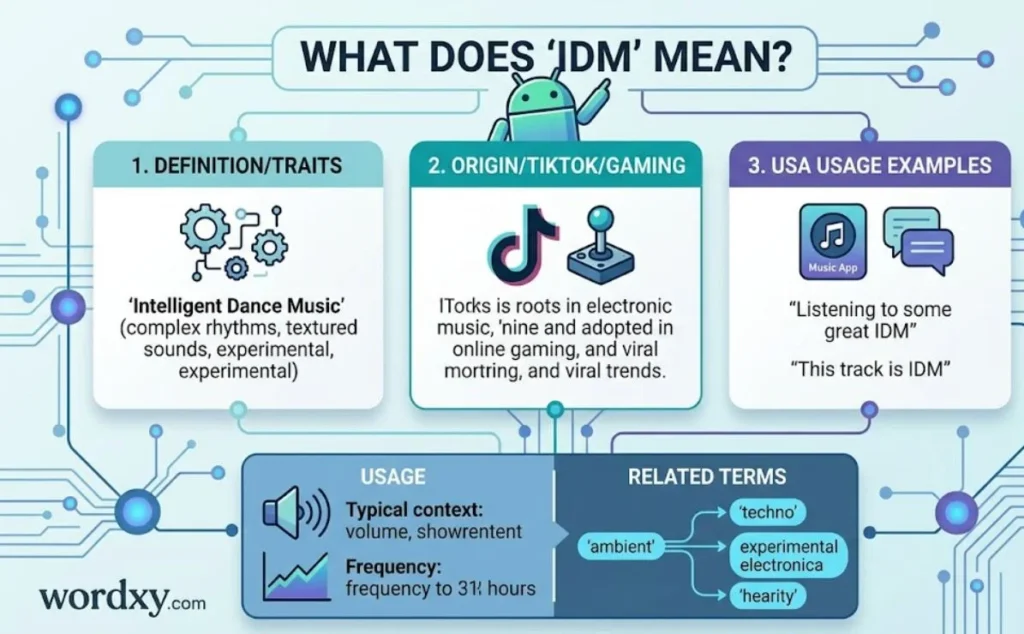
The journey of IDM is a fascinating look at how internet culture recycles language. Long before it hit TikTok comments or Snapchat stories, IDM stood for “Internet Download Manager” or “Intelligent Dance Music.” If you were a tech geek in the early 2000s or an electronic music fan, your brain would go there first.
However, the cultural shift happened around the early 2020s on platforms like Discord and Twitter (X). As mobile typing became the dominant form of interaction, users began shortening common phrases to save time. Unlike “IDK” (I Don’t Know), which has been around for decades, “IDM” emerged as a more polite way to be indecisive.
It gained massive traction in the USA through gaming communities. When a teammate asks to switch characters or change a strategy, replying “idm” became the quickest way to keep the peace and the momentum.
From there, it spilled over into the mainstream, fueled by influencers who prioritize “low-stakes” energy in their brand. Today, it is a hallmark of American digital etiquette.
Real-Life Conversations
To truly understand the rhythm of IDM, you have to see it in the wild. Here are a few ways it actually looks on a phone screen.
Scenario 1: Group Chat Plans
Chloe: Hey guys, should we do tacos or pizza tonight?
Jordan: idm, both sound fire.
Maya: Pizza has my vote!
Jordan: Cool, pizza it is then.
Scenario 2: The Instagram DM
Leo: Yo, is it cool if I post that photo of us? I look a bit wild lol.
Sarah: idm! you look fine, don’t overthink it.
Scenario 3: TikTok Comment Thread
User1: Am I the only one who thinks this song is better slowed down?
User2: idm it either way, the beat is just good.
Scenario 4: A Casual Text
Tyler: I might be like 10 mins late, is that okay?
Hannah: idm at all, I’m still getting ready anyway!
Why is it Viral?
IDM is trending in American culture right now because we are living in an era of “decision fatigue.” We are bombarded with choices every day, and the ability to gracefully step back and let someone else lead is actually a social relief. Using IDM signals that you are not a high-maintenance person.
In a world that feels increasingly polarized and intense, being the “idm” person is a form of social currency—it means you are easy to be around.
Emotional & Psychological Meaning
Psychologically, IDM is a tool for social harmony. When we use it, we are subconsciously telling the other person, “I trust your judgment” or “My ego isn’t tied to this outcome.”
It expresses a sense of safety. Think about it: you only say “I don’t mind” to people you feel comfortable with. If you were in a high-stakes job interview, you probably wouldn’t say “idm” when asked about your salary. You use it with friends and family to lower the temperature of the conversation.
I remember a time when a friend asked if I minded if they brought a date to my birthday dinner. I was stressed about the seating, but I replied “idm” anyway. Surprisingly, saying those three letters actually made me feel more relaxed. It forced me to adopt the “chill” persona I was projecting. It’s a linguistic way of letting go of control.
Usage in Different Contexts
While IDM is flexible, it doesn’t belong everywhere.
- Social Media: This is the natural habitat for IDM. Use it freely in captions, comments, and DMs. It fits the fast-paced, informal nature of these platforms perfectly.
- Friends & Relationships: This is where it shines. It builds rapport by showing you are flexible. However, be careful not to use it too much, or your partner might feel like you never want to make a decision.
- Work / Professional Settings: Proceed with caution. In a casual Slack channel with close coworkers, it’s fine. In an email to a client? Absolutely not. It can come across as unprofessional or even lazy.
- Casual vs. Serious Tone: IDM is strictly for casual vibes. If someone is discussing something deeply personal or serious, “idm” can feel dismissive. If a friend asks, “Does it bother you when I talk about my ex?” replying “idm” might seem cold. A full sentence is better there.
When NOT to Use It
Context is everything. You should avoid IDM when:
- Precision is Required: If your boss asks if you can meet at 2:00 PM or 4:00 PM, saying “idm” is unhelpful. They need a choice.
- Sensitive Situations: If someone is apologizing for a genuine mistake, “idm” might sound like you don’t care about their feelings.
- Formal Documentation: Never use slang in legal, medical, or official documents.
Using IDM in the wrong place can make you seem detached or uninvested in the relationship. For more tips on navigating tricky social waters, you can check out our guide on how to communicate effectively in digital spaces.
Common Misunderstandings
The biggest hurdle with IDM is the tone-gap. Because you aren’t there to use your voice, the reader might interpret “idm” as “I don’t care.” There is a subtle but massive difference between those two.
“I don’t mind” implies “I’m happy with either.”
“I don’t care” implies “This is beneath my interest.”
Another confusion arises with the older meanings mentioned earlier. If you are talking to a software engineer, they might think you are talking about a download manager. If you’re at a rave, they might think you’re talking about music. Always read the room.
Comparison Table
| Term | Meaning | Vibe | Usage Frequency |
| IDM | I Don’t Mind | Flexible & Chill | Very High |
| IDC | I Don’t Care | Indifferent/Edgy | High |
| WTV | Whatever | Dismissive/Passive | Medium |
| IKR | I Know, Right? | Agreement | Very High |
| NVM | Never Mind | Dropping a topic | High |
Key Insight: While IDC and IDM look similar, they carry very different emotional weights. IDC can be seen as rude, whereas IDM is almost always seen as polite.
Variations & Types of IDM
- IDM AT ALL: I don’t mind at all (Extra emphasis on being okay with it).
- IDM BUT…: I don’t mind, but here is a small condition.
- IDMJ: I don’t mind, just (Adding a quick thought).
- IDM RLY: I don’t mind really (Reinforcing your sincerity).
- IDM TBH: I don’t mind to be honest (Adding a layer of truthfulness).
- IDM IF U DO: I don’t mind if you do (Giving permission).
- U IDM?: Do you mind? (Turning it into a question).
- IDM EITHER WAY: I am fine with both options.
- IDM FR: I don’t mind for real (Showing you aren’t just being polite).
- IDM IF WE…: I don’t mind if we (Suggesting a shared action).
How to Respond When Someone Uses It
If someone hits you with an “idm,” here is how to keep the flow going:
- Casual: “Bet, let’s go with the first option then.”
- Funny: “Wow, look at you being the most chill person on earth lol.”
- Mature: “I appreciate you being flexible! Let’s do 7:00 PM so we aren’t rushed.”
- Respectful: “Thanks for letting me choose. I’ll make sure it’s a good spot!”
Regional & Cultural Usage
Language isn’t a monolith. According to Oxford Languages, the way we shorten phrases often reflects our cultural values of efficiency and social closeness.
- Western Culture (USA/UK): IDM is standard for being polite and avoiding conflict. It fits the “no worries” lifestyle.
- Asian Culture: In many Asian internet circles, being direct is sometimes avoided to “save face.” IDM is used frequently to maintain group harmony.
- Middle Eastern Culture: In English-speaking Middle Eastern youth circles, IDM is often used as a sign of hospitality or being a “good host” by letting the other person choose.
- Generational Differences: Gen Z and Gen Alpha use IDM as a default. Millennials might still prefer typing out “I don’t mind” to avoid looking like they are trying too hard to be young. Baby Boomers almost never use it and might find it confusing.
Is It Safe for Kids?
Yes, IDM is 100% safe. It contains no profanity, no hidden sexual innuendos, and no aggressive connotations. It is one of the “cleanest” slang terms used by teenagers today. The only “danger” is a parent not knowing what it means and thinking their kid is being dismissive when they are actually being agreeable.
FAQs
Q: Is IDM an insult?
A: No, IDM is not an insult. It is a way to express flexibility and agreement.
Q: Can IDM mean something else in gaming?
A: Rarely, it can refer to “Ice Demon” or specific game mechanics, but 99% of the time in chat, it means “I don’t mind.”
Q: Is “idm” capitalized?
A: In casual texting, it is almost always lowercase (idm). Capitalizing it (IDM) can make it look like an official acronym or like you are shouting.
Q: How is IDM different from “Whatever”?
A: “Whatever” often has a negative, dismissive tone. IDM is positive and cooperative.
Q: Should I use IDM in a business email?
A: No. It is better to use the full phrase “I don’t mind” or “I am flexible regarding…” to maintain a professional standard.
Final Thought
Understanding slang like IDM is about more than just decoding letters; it’s about connecting with the way people feel and communicate today.
In a digital world that often feels loud and demanding, a simple “idm” is a breath of fresh air. It says you’re easy-going, you’re present, and you’re down for the ride. So the next time someone asks if you want to try that new weird coffee spot down the street, go ahead and drop an “idm”—you might just find that being flexible is the best way to live.