In the ever-evolving landscape of internet culture, few terms have achieved the staying power of Sigma. Whether you’ve seen it paired with heavy “phonk” music on TikTok or used to describe a quiet but successful friend, understanding the “Sigma” phenomenon is essential for navigating modern digital communication.
What Does Sigma Mean?
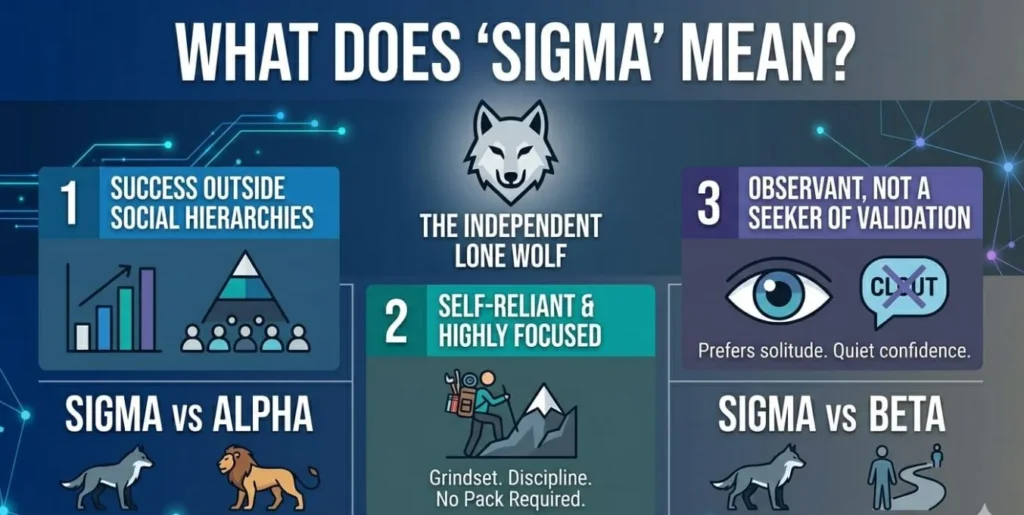
Sigma is a slang term used to describe a person (typically a male) who is highly successful, independent, and self-reliant but chooses to live outside of normal social hierarchies.
Unlike an Alpha, a Sigma doesn’t need a “pack” or constant social validation to feel powerful. They are the ultimate “lone wolves” of the social world—thriving in silence and moving toward their goals without the need for an audience.
The Origin of the Sigma Slang
While the term has roots in socio-sexual hierarchy subcultures, it exploded into the mainstream through TikTok and YouTube Shorts between 2023 and 2024.
It became synonymous with the “Sigma Grindset”, a lifestyle focused on extreme self-improvement, physical fitness, and financial independence. Pop culture icons like Patrick Bateman (American toxic) and Thomas Shelby (Peaky Blinders) became the unofficial faces of the movement, representing a stoic, detached, and hyper-focused persona.
How to Use “Sigma” in a Sentence
In contemporary American slang, “Sigma” is used both as a genuine compliment and a self-aware meme. Here are a few ways you’ll hear it:
- “He didn’t even acknowledge the haters after the game; he’s got that total Sigma energy.”
- “I’m staying home this weekend to finish my coding project—full Sigma grindset mode.”
- “That move was so Sigma; he did exactly what he wanted without asking for permission.”
Why is Sigma Trending in American Culture?
The “Sigma” trend reflects a significant shift in American youth culture toward individualism. In an era dominated by social media pressure and the hunt for “clout,” the Sigma represents a counter-culture: someone who is successful but doesn’t care about “likes” or external approval.
For Gen Z and Gen Alpha, the Sigma is an aspirational figure of quiet confidence.
Related Slang Terms You Should Know
To fully understand the Sigma universe, you need to know these related terms:
| Term | Definition |
| Alpha | The traditional leader of a social group who seeks dominance and visibility. |
| Beta | Someone seen as a follower or more submissive in social settings. |
| Grindset | A portmanteau of “grind” and “mindset,” referring to a lifestyle of constant hard work. |
| Lone Wolf | A person who prefers to operate, live, or work alone. |
| Based | Being yourself and not caring what others think; often used alongside Sigma. |
FAQs: Everything You Need to Know
Q1: Is being a Sigma a good thing?
In modern slang, yes. It is generally viewed as a compliment. It implies that you are independent, capable, and successful without being loud, arrogant, or desperate for attention.
Q2: What is a “Sigma Female”?
A Sigma Female is the direct counterpart to the male version. She is an independent, empowered woman who ignores social trends, avoids “mean girl” hierarchies, and paves her own path to success through competence and self-reliance.
Q3: Why is the “Sigma Face” viral on TikTok?
The “Sigma Face” is a specific facial expression, typically a squint with a slight smirk and raised eyebrows. It was popularized by creators to mimic the cool, indifferent, and slightly “judgy” look of a person who is unimpressed by social norms.
Q4: Is the Sigma trend still relevant in 2026?
Absolutely. While it started as a meme, the core values of the “Sigma”—independence and self-focus—have integrated into the broader cultural vocabulary of the mid-2020s.
Final Thoughts: The Evolution of Independence
The rise of “Sigma” marks a fascinating point in digital history where the “loner” trope was rebranded as a position of power. In 2026, the term has transitioned from a niche subculture meme into a universal shorthand for self-sufficiency.
Whether used ironically or as a genuine lifestyle guide, the Sigma phenomenon highlights a collective desire to unplug from the “always-on” nature of social validation.
It reminds us that there is significant value in building your own world, setting your own standards, and finding success—not for the “clout,” but for yourself.
In a world that never stops talking, the Sigma’s greatest strength is the ability to stay silent and keep winning.