What Does LMS Meaning ,Have you ever been scrolling through Snapchat stories and seen a simple, three-letter acronym plastered over a selfie or a sunset? You see “LMS” and suddenly feel like you’ve missed a memo in the ever-evolving dictionary of digital slang.
If you’ve felt that slight pang of “am I getting old?”—don’t worry. Social media moves fast, and Snapchat is the lightning rod for new terminology. Understanding these shorthand signals isn’t just about knowing the definition; it’s about understanding the social currency of the people using them.
LMS Meaning on Snap – The Quick Definition
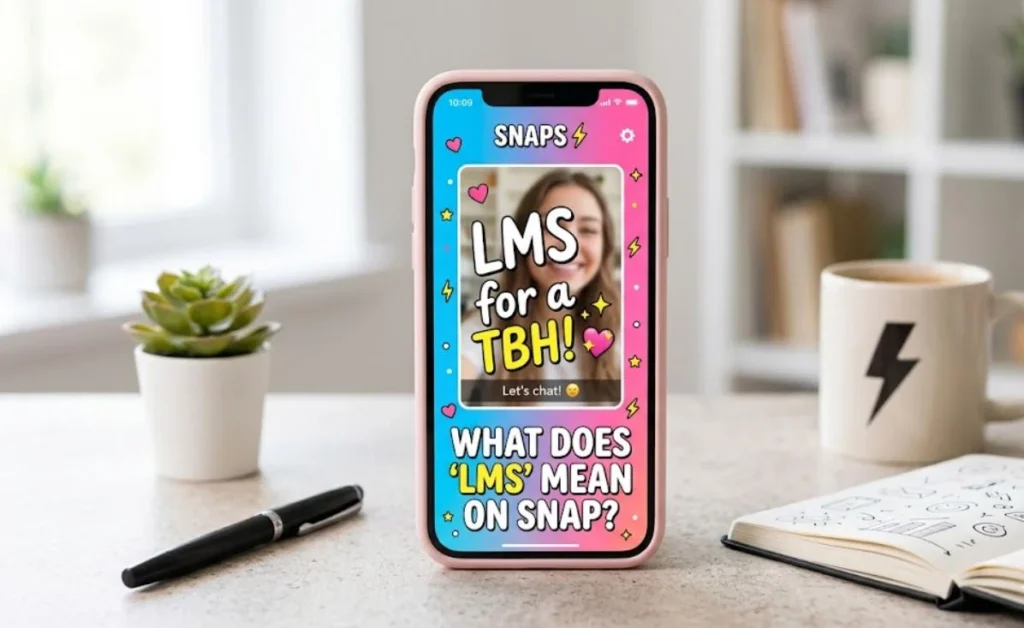
At its core, LMS stands for “Like My Status.”
On Snapchat, where there isn’t a traditional “status” like on Facebook, it translates to “Like My Story” or “Like This Snap.” It is a direct call to action, a digital nudge asking friends to interact with the content.
- “LMS for a TBH” (Like my status for a “To Be Honest” opinion about you).
- “LMS if you’re bored.”
- “Bored… LMS for a compliment.”
Origin & Background: The Evolution of the Digital Nudge
The phrase didn’t actually start on Snapchat. Its roots go back to the early 2010s on Facebook. Back then, “LMS” was a way to game the algorithm. The more likes a status had, the higher it appeared in newsfeeds. It was the original “engagement hack” for teenagers.
As the younger demographic migrated to Instagram and eventually Snapchat, the acronym followed them. However, on Snapchat, it took on a more intimate, conversational tone. It shifted from “help me be popular” to “let’s start a private conversation.” It became a gateway to the DM (Direct Message).
Real-Life Conversations: LMS in the Wild
To truly grasp how this functions, you have to see it in its natural habitat. It’s rarely used in isolation; it’s almost always a trade.
Scenario 1: The Boredom Cure (Snapchat Story)
Person A: LMS for a rate 1-10!
Person B: Likes the story
Person A: You’re an easy 9/10, your outfit yesterday was fire.
Scenario 2: The Instagram DM
Sarah: Hey, did you see Chloe’s story?
Mike: Yeah, she posted “LMS for a confession.”
Sarah: Are you going to like it?
Mike: Nah, I don’t want to know what she actually thinks of me lol.
Scenario 3: The TikTok Comment Thread
User 1: This video is so relatable. LMS if you’ve been there.
User 2: Honestly, every single day.
User 3: Liking the comment to show solidarity.
Emotional & Psychological Meaning
Why do we use it? It isn’t just laziness. Modern communication is riddled with “micro-anxieties.” Sending a direct message to someone can feel high-stakes or intrusive.
LMS acts as a low-stakes invitation. It says, “I want to talk, but I don’t want to be the one to start it.” It’s a way to test the waters of social interest. If you post “LMS” and nobody does, you can delete it and pretend it never happened. If people do like it, you have “permission” to interact.
I remember a time when a friend of mine was hesitant to reach out to a crush. Instead of a direct text, she posted an “LMS for a song recommendation” story. When the crush liked it, the ice was broken. It’s a digital safety net.
Usage in Different Contexts
While ubiquitous among younger users, the “vibe” of LMS changes depending on where you are.
- Social Media: Here, it’s a pure engagement tool. It’s about numbers and visibility.
- Friends & Relationships: It’s a “ping.” A way to see who is paying attention to your life.
- Work / Professional Settings: Avoid at all costs. Using “LMS” in an email or Slack channel will make you look unprofessional. In a professional setting, we use “Please let me know your thoughts” or “Feedback welcome.”
- Casual vs Serious Tone: LMS is strictly casual. Using it during a serious emotional discussion or a crisis would come across as incredibly tone-deaf.
When NOT to Use It
Context is king. You should generally avoid using LMS in these scenarios:
- Professional Environments: As mentioned, it lacks the gravity required for business.
- During Serious News: If you’re posting about something somber, asking for likes is seen as “clout-chasing” and is highly disrespectful.
- To People Outside Your Age Bracket: If you send “LMS” to your grandmother, she’ll likely spend twenty minutes trying to find a button that doesn’t exist.
Common Misunderstandings
The biggest mistake people make is taking the “Status” part too literally. Since Snapchat doesn’t have a “Status” bar, beginners often look for a specific feature. Remember: The “Status” is whatever you just posted.
Another confusion is thinking it’s a demand. It’s an invitation. If you don’t “LMS,” no one is going to hold a grudge—it’s just a passing digital moment.
Comparison Table: Slang Variations
| Term | Meaning | Nuance |
| LMS | Like My Status | An invitation for engagement. |
| TBH | To Be Honest | Often the “reward” for liking a status. |
| HMU | Hit Me Up | A more direct request for a message. |
| NGL | Not Gonna Lie | Used when giving the feedback after an LMS. |
| BRB | Be Right Back | An exit strategy, the opposite of an invitation. |
Key Insight: While LMS is about the action of liking, terms like TBH or HMU are about the result of that action. They all work together to keep the social gears turning.
Variations & Types of LMS Requests
- LMS for a TBH: Short for “To Be Honest,” the poster gives a genuine opinion.
- LMS for a Rate: The poster gives you a score out of 10 based on looks or vibes.
- LMS for a Compliment: A wholesome version where the poster says something nice.
- LMS for a Song: The poster sends you a track they think you would like.
- LMS for a DM: A request for the liker to send a private message.
- LMS for a Date/Pass: A playful game assessing romantic compatibility.
- LMS for a First Impression: Sharing what the poster first thought when they met you.
- LMS if you’re up: A way to find late-night conversation partners.
- LMS for a BFF Rank: Telling someone where they sit on a friendship scale.
- LMS for a confession: Revealing a small secret to the person who likes.
How to Respond When Someone Uses It
If you see an LMS post, your response depends on your relationship with the person:
- Casual Replies: Just double-tap or hit the heart icon. No words needed.
- Funny Replies: “I liked it, now give me my 10/10 rating or we aren’t friends.”
- Mature Replies: If it’s a close friend, skip the game and just send a message saying, “Saw your story, how are you actually doing?”
- Respectful Replies: If you don’t know them well, it’s often better to just keep scrolling unless you want to start a new friendship.
To sharpen your overall communication skills and understanding of modern phrasing, checking out resources like Wordyex can help bridge the gap between slang and formal English.
Regional & Cultural Usage
- Western Culture (US/UK/Canada): Very common, specifically among Gen Z. It’s seen as a standard part of social “maintenance.”
- Asian & Middle Eastern Culture: While the acronym is used, there is often more weight placed on the direct message that follows. In some cultures, public “rating” games are seen as slightly more controversial.
- Global Internet Usage: LMS is a universal “ping” across English-speaking digital communities.
- Generational Differences: For Millennials, this is a throwback to early Facebook. For Gen Z, it is a living, breathing part of Snapchat.
For more information on how social media platforms evolve their language, you can refer to the Oxford English Dictionary’s updates on digital neologisms.
Is It Safe for Kids?
Yes, LMS is generally safe. It is a functional acronym rather than a predatory or “NSFW” term. However, parents should be aware that “LMS for a TBH” or “LMS for a Rate” can sometimes open the door for cyberbullying if the feedback given is negative. It’s the interaction that matters, not the acronym itself.
FAQs
1. Does LMS mean “Last Man Standing”?
In gaming (like Call of Duty or Fortnite), yes. But on Snapchat and Instagram, it almost always means “Like My Status.”
2. Is LMS still popular in 2026?
Yes, though it often cycles in and out of fashion. It remains a core part of the “Snapchat subculture.”
3. Should I use LMS on LinkedIn?
Absolutely not. LinkedIn requires professional, clear, and value-driven language.
4. What do I do after I like someone’s LMS post?
Wait for them to reach out! Usually, the person who posted the “LMS” will send you a DM or post a follow-up story with your “reward.”
5. Can LMS be used in a text message?
It’s rare. Usually, you’d just say “Check my story” or “Like my latest post” to get someone’s attention.
Conclusion
In the end, “LMS” is more than just a request for a “like.” It’s a digital handshake, a way for people to stay connected in a world that often feels noisy and disconnected. By understanding these small linguistic shifts, we can better navigate our relationships and the platforms we use every day.
Communication is about connection. Whether you’re using high-level SEO strategies or just trying to figure out what your younger cousin is posting, the goal is the same: to be understood. So, the next time you see “LMS” on a story, you won’t just see three letters—you’ll see an open door. Will you walk through it?