The Hidden Layers of Modern Digital Slang
what does kms mean, Language is a living, breathing thing. As a communications educator, I’ve watched our vocabulary shift from formal letters to 140-character tweets, and now to a cryptic shorthand that can feel like a foreign language. If you’ve stumbled across the three letters “KMS” on your screen, you aren’t alone in your confusion.
While it looks like a simple acronym, it carries a weight that ranges from dramatic humor to genuine concern. Understanding the nuance behind it is essential for anyone navigating the digital landscape today.
KMS – The Quick Meaning
At its most basic, literal level, KMS stands for “Kill Myself.”
Now, before that feels too heavy, it is vital to understand that in 99% of internet contexts, it is used as hyperbolic slang. It is rarely a literal statement of intent; rather, it’s a way to express extreme frustration, embarrassment, or “cringe.”
- “I just tripped in front of my crush, kms.”
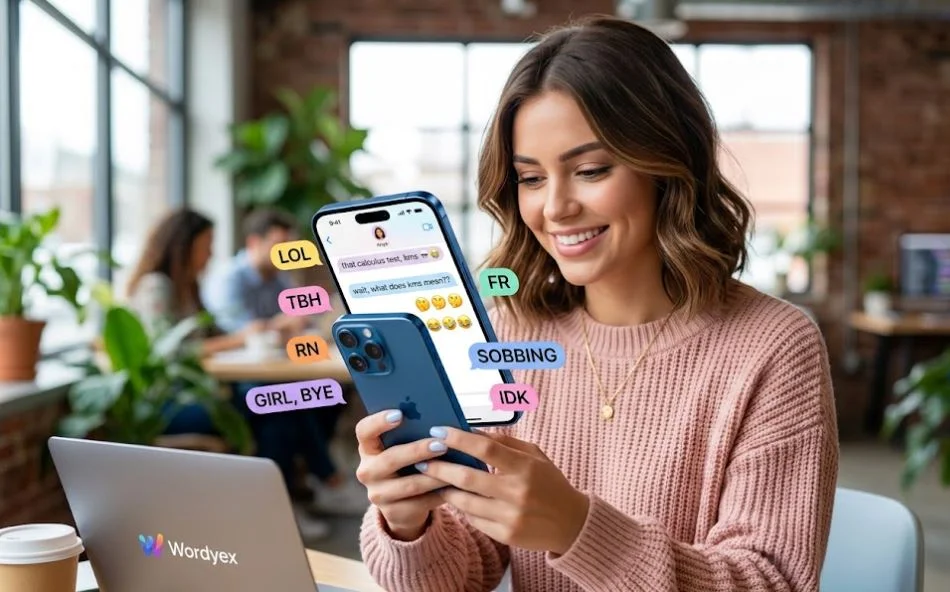
- “Calculus exam was impossible. kms.”
- “I forgot my headphones for a 5-hour flight… kms.”
Origin & Background: From Dark Humor to Mainstream
The phrase didn’t appear overnight. It evolved alongside the rise of “doom-scrolling” and the self-deprecating humor prevalent in Millennial and Gen Z culture.
Originally emerging in early 2000s chatrooms and platforms like Tumblr, it was part of a broader trend of using “dark humor” to cope with daily inconveniences. As social media platforms like TikTok and Instagram took over, the term became a staple of the digital vernacular. It’s a linguistic shortcut to say, “This situation is so incredibly annoying/embarrassing that I can’t handle it.”
Real-Life Conversations
To truly understand how this fits into a chat, you have to see it in action. Here is how it typically looks in the wild:
On WhatsApp (The “Life is Hard” Chat)
Person A: Did you see the boss cc’d the entire department on your typo?
Person B: No way. I’m actually going to kms right now. 💀
On Instagram DMs (The “Cringe” Moment)
Person A: Look at this photo of us from middle school.
Person B: OH MY GOD. Delete that. kms. Why was my hair like that?
In TikTok Comments (The “Relatable” Struggle)
User 1: When you realize the video you just posted has a stain on your shirt.
User 2: literal kms energy. I’d never post again.
Through Text (The “Daily Inconvenience”)
Person A: Your car battery is dead again.
Person B: kms… I’m going to be so late for the interview.
Emotional & Psychological Meaning
Why do we use such extreme language for small problems? As a writer, I find the psychology fascinating. Using “KMS” is a form of emotional venting.
In a world where everything is “aesthetic” and “perfect,” admitting that a situation is unbearable provides a strange sense of relief. It reveals a modern communication style rooted in exaggeration. We don’t just “dislike” something anymore; we “hate” it. We aren’t just “embarrassed”; we “want to disappear.”
A Personal Perspective: I remember a student once told me they used “kms” because saying “I am mildly inconvenienced by this situation” felt too formal and didn’t capture the sudden “gut-punch” feeling of a social faux pas. It’s about the intensity of the moment.
Usage in Different Contexts
Context is everything. Using this acronym in the wrong place can lead to a call from HR or a worried parent.
- Social Media: This is its natural habitat. It’s used freely in memes, captions, and comments to signify relatability.
- Friends & Relationships: Between close friends, it’s a sign of comfort. You feel safe enough to be dramatic without them taking you literally.
- Work / Professional Settings: Avoid at all costs. In a professional environment, this language is unprofessional and can be misinterpreted as a genuine mental health crisis.
- Casual vs. Serious Tone: If someone says “kms” after dropping an ice cream cone, it’s casual. If it’s paired with “I can’t do this anymore” in a flat tone, the context shifts toward serious.
When NOT to Use It
Language carries responsibility. Because of the literal meaning of the words, you should be careful.
- With Strangers: They don’t know your sense of humor and might take it literally.
- In Formal Writing: Whether it’s an essay or a business email, slang this heavy has no place.
- Near People Sensitive to the Topic: Be mindful of those who have dealt with actual loss.
- Inclusive Language: Always consider if your “hyperbole” is trivializing serious issues. If you want to learn more about how language shapes our world, check out Wordyex for more insights.
Common Misunderstandings
The biggest hurdle with “KMS” is the Literal vs. Figurative divide.
Older generations often view the phrase with immediate alarm. They see the literal words and fear for the person’s safety. Meanwhile, a teenager might use it because they forgot to charge their phone.
Another misunderstanding is tone confusion. Without an emoji (like the skull 💀 or the weary face 😩), the intent can get lost in translation.
Slang Comparison Table
| Term | Meaning | Tone | Usage Frequency |
| KMS | Kill myself | Dramatic / Hyperbolic | High |
| KML | Killing me laughing | Joyful / Amused | Medium |
| FML | F*** my life | Frustrated / Resigned | Very High |
| LOL | Laughing out loud | General amusement | Universal |
| I’m Dead | That was so funny | Extreme amusement | High |
Key Insight: While KMS and FML are both expressions of frustration, KMS is usually used for sudden moments of embarrassment, whereas FML is used for a string of bad luck.
Variations & Related Slang
- KSM: A common typo for KMS.
- KML: “Killing me laughing”—completely different vibe.
- KMP: “Kill me please”—often used when stuck in a boring meeting.
- I’m screaming: Expressing intense reaction (positive or negative).
- I’m sobbing: Usually used when something is very cute or very sad.
- End me: A synonym for KMS used in embarrassing situations.
- Crying: Used when something is funny.
- Skull Emoji (💀): Often follows KMS to signal “I’m dead from laughter/cringe.”
- I can’t: Short for “I can’t even deal with this.”
- It’s over for me: Used when a mistake feels permanent.
How to Respond
The right response depends entirely on the “vibe” of the conversation.
- Casual: “Standard behavior for you lol.”
- Funny: “Can I have your shoes first?”
- Mature: “That sounds rough, but you’ll laugh about it tomorrow.”
- Respectful/Concerned: “Hey, are you just venting, or are you actually having a hard time? I’m here if you need to talk.”
Regional & Cultural Usage
- Western Culture: Heavily used in US/UK/Canada as standard internet slang.
- Asian/Middle Eastern Culture: Usage is growing among English-speaking youth, though older generations in these regions may find the dark humor more taboo due to cultural values regarding life and death.
- Generational Gap: Gen Z uses it as a “period” at the end of a sentence. Millennials use it for genuine frustration. Gen Alpha is already moving toward newer, weirder terms.
For a deeper dive into how global English is evolving, you might find the resources at the Linguistic Society of America quite helpful.
Is It Safe for Kids?
Technically, it is “internet safe,” but parents should be aware. It’s part of a culture of exaggeration. However, if a child is using it frequently, it’s worth a conversation to ensure they are using it as a joke and not expressing a deeper sentiment. It is less about the “slang” and more about the “intent.”
FAQs
1. Does KMS always mean something bad?
No. Usually, it just means the person is embarrassed or slightly annoyed.
2. Is it different from KML?
Yes! KML means “Killing Me Laughing.” Don’t mix them up!
3. Should I report someone for saying KMS?
Only if the context suggests a genuine crisis. If they said it because they lost a video game, it’s likely just “gamer talk.”
4. Why do people use the skull emoji with it?
The skull 💀 represents “I’m dead,” which reinforces the hyperbolic nature of the slang.
5. Is it okay to use at school?
In casual talk with friends, it’s common. Around teachers? Definitely not.
Conclusion
At the end of the day, KMS is a symptom of our high-intensity digital world. We use big words for small problems because the internet is a big, loud place. While it might seem jarring at first, understanding that it’s usually a cry for “relatability” rather than a cry for “help” makes navigating modern conversations much easier.
Next time you see it, take a breath. Check the context. Most likely, your friend just had a really awkward interaction at the grocery store and needs you to “lol” at their pain. Language is about connection—even when that connection is built on a bit of dramatic flair.