The Real Meaning Behind the Slang
dpmo meaning slang, We’ve all been there—scrolling through a comment section or opening a DM only to see four letters that look more like a typo than a sentence: DPMO.
If you feel slightly out of the loop, don’t worry. Language is moving faster than ever. One day we’re “vibe checking,” and the next, a single acronym carries the weight of an entire mood. People search for this term because it’s a gatekeeper of modern social energy.
Understanding DPMO isn’t just about knowing the words; it’s about reading the room. It solves the confusion of whether someone is joking, genuinely frustrated, or just setting a boundary.
DPMO – Quick Meaning
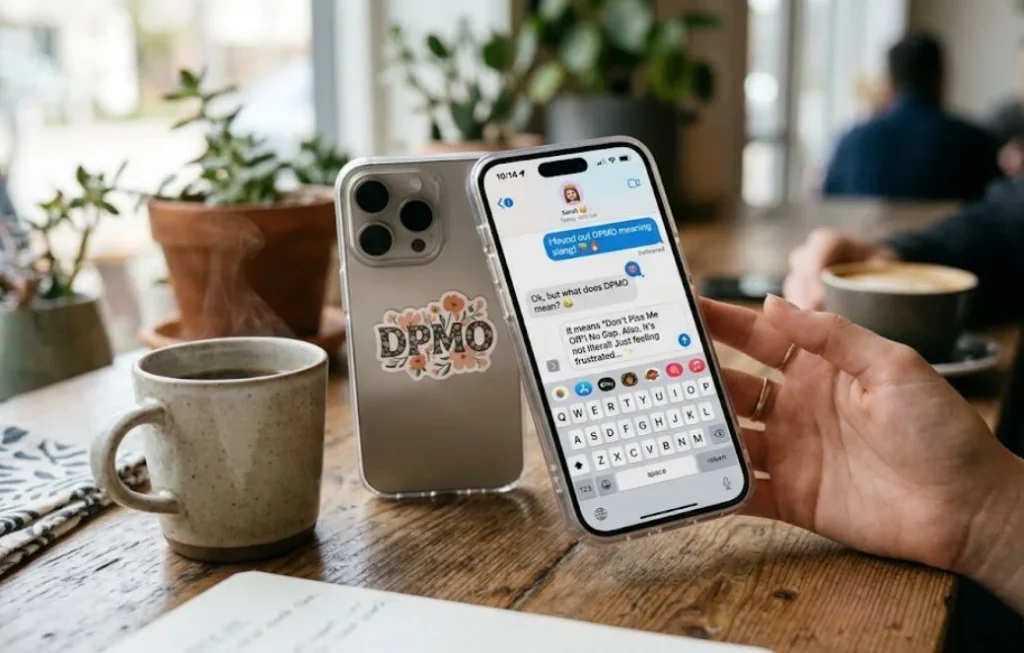
At its core, DPMO stands for “Don’t Piss Me Off.”
It is a digital “stop sign.” It’s used when someone has reached their limit, or when a situation is so absurd, annoying, or disrespectful that words fail.
- The Vibe: Frustrated, exhausted, or jokingly defensive.
- The Intent: To tell someone to back off or stop being annoying.
Real-world snippets:
“I just saw the line at the DMV… DPMO.”
“If you cancel our plans one more time, seriously, DPMO.”
“DPMO with that ‘we need to talk’ text at 11 PM.”
Origin & Background
While it feels like DPMO popped up overnight on TikTok, its roots are deeper. It originated within Black British and American urban slang long before it hit the mainstream. Like most impactful slang, it migrated from niche communities to Twitter (X) and eventually saturated the “For You” pages of Gen Z.
Culturally, it represents the shift toward “low-stakes aggression.” We live in a fast-paced digital world where we don’t always have time for a long paragraph about our feelings. DPMO acts as a shorthand for emotional burnout. It’s the linguistic equivalent of a deep, heavy sigh.
Real-Life Conversations
To see how DPMO breathes in the wild, look at these scenarios. Notice how the meaning shifts based on the relationship.
The WhatsApp Group Chat
- Person A: “Yo, the professor just added three more chapters to the final exam.”
- Person B: “DPMO. I haven’t even started chapter one yet.”
Instagram DMs
- Person A: (Sends a meme of an ex-boyfriend looking happy)
- Person B: “Why would you send me this? DPMO lol.”
TikTok Comments
- User 1: “Am I the only one who thinks pineapple belongs on pizza?”
- User 2: “DPMO… stay out of the kitchen forever.”
Text Message (The Sibling Dynamic)
- Sibling A: “I accidentally ate the leftovers you saved in the fridge.”
- Sibling B: “DPMO. I was thinking about that pasta all day.”
Emotional & Psychological Meaning
DPMO is more than an acronym; it’s a psychological defense mechanism. In an era of “oversharing,” DPMO allows a person to express anger without being overly dramatic. It signals a “tipping point.”
Psychologically, using slang like this provides a sense of belonging. When you use it correctly, you’re signaling that you understand the unspoken rules of modern social dynamics.
I remember once trying to explain a complex frustration to a friend. I spent ten minutes venting, and they just replied, “Honestly, DPMO.” Suddenly, I felt completely understood. That’s the power of these four letters—they validate the feeling of being “done” with a situation.
Usage in Different Contexts
Context is everything. Using DPMO in the wrong place can lead to some awkward stares.
- Social Media: This is the Wild West. You can use it freely in captions, comments, or stories to react to mildly annoying news or trending “cringe” content.
- Friends & Relationships: Here, it’s often playful. It’s a way to tell your partner or best friend they are being “extra” without actually starting a fight.
- Work / Professional Settings: Avoid it. Unless you work in an incredibly casual creative agency where slang is the primary language, telling your boss “DPMO” about a deadline is a one-way ticket to HR.
- Casual vs. Serious Tone: In a casual tone, it’s a joke. In a serious tone—usually sent as a standalone message—it means “leave me alone before I actually get mad.”
When NOT to Use It
Even though it’s popular, DPMO isn’t universal.
- High-Stakes Conflict: If you are in a genuine, deep argument with a loved one, using “DPMO” can come across as dismissive or immature. It shuts down communication rather than solving it.
- Cultural Sensitivity: If you are not part of the youth culture or the communities that birthed the term, using it “to look cool” can feel forced.
- Inclusive Language: Be mindful that some people may find the word “pissed” offensive or too vulgar for certain settings.
- No-Index Moments: Avoid using it in formal documentation, emails, or when speaking to those who aren’t digitally “online.”
Common Misunderstandings
The biggest mistake people make is taking DPMO literally 100% of the time.
- The Literal Trap: If someone says “DPMO” after you tell a joke, they aren’t necessarily threatening you. They are likely saying “that joke was so bad/good it’s annoying.”
- The Tone Confusion: Because it’s text, you can’t hear the inflection. Is it a playful “DPMO” or a “Stop talking to me” DPMO? Always look at the emojis (or lack thereof) surrounding it.
Comparison Table
| Term | Meaning | Energy Level |
|---|---|---|
| DPMO | Don’t Piss Me Off | High / Assertive |
| ISTG | I Swear To God | Intense / Emphasizing |
| FR | For Real | Agreeable / Validating |
| SMH | Shaking My Head | Disappointed / Quiet |
| NGL | Not Gonna Lie | Honest / Vulnerable |
Export to Sheets
Key Insight: While DPMO focuses on external irritation, terms like SMH are more about internal disappointment. DPMO is active; SMH is passive.
Variations & Types of DPMO
- DPMO (Standard): The classic “stop it.”
- DPMO FR: “Don’t piss me off, for real”—used when the annoyance is actually serious.
- DPMO lol: The “soften the blow” version used to show you’re joking.
- DPMO 💀: Used when something is so annoying it’s actually funny.
- Please DPMO: A sarcastic “polite” request to stop being irritating.
- Don’t Piss Me On: A common typo; avoid this one!
- DPMO Energy: Describing a person or situation that is inherently annoying.
- DPMO Vibes: Similar to energy, used for a general atmosphere of frustration.
How to Respond When Someone Uses It
If someone hits you with a “DPMO,” your response determines the next ten minutes of your life.
- Casual: “My bad, I’ll chill.”
- Funny: “You know you love me though 😇”
- Mature: “Sorry, didn’t realize I was pushing it. We can talk later.”
- Respectful: “Noted. I’ll back off.”
Regional & Cultural Usage
- Western Culture: Used heavily in the US and UK. In the UK, it often blends with “Mandem” slang and carries a slightly sharper edge.
- Asian & Middle Eastern Culture: Primarily used by the younger, English-speaking “International School” demographic or those heavily influenced by Western social media.
- Generational Gap: Gen Z uses it as a daily staple. Millennials might use it but often prefer “Don’t even get me started.” Baby Boomers almost never use it, often finding the phrasing too aggressive.
If you are looking to explore more about how these terms evolve, check out Wordyex for deep dives into digital linguistics. Understanding these shifts is vital for anyone interested in the evolution of language in the 21st century.
Is It Safe for Kids?
Generally, yes, but with a caveat. It contains a “mild” swear word (pissed). For most teenagers, this is everyday language. However, for younger children, it might be a bit too aggressive or vulgar for school environments. It’s “PG-13” slang—fine for the internet, maybe not for the dinner table with Grandma.
FAQs
Q: Does DPMO mean something else in business? A: Actually, in manufacturing, it can mean “Defects Per Million Opportunities.” Context is everything! Don’t confuse a quality control report with a text from your friend.
Q: Is DPMO rude? A: It can be. It depends entirely on your relationship with the person. Between best friends, it’s a joke. Between strangers, it’s a confrontation.
Q: Can I use DPMO in a professional email? A: No. Stick to “I am concerned about this” or “This is a bit frustrating.”
Q: Who started DPMO? A: It originated in AAVE (African American Vernacular English) and British Multicultural London English (MLE) before spreading globally via social media.
Q: What is the opposite of DPMO? A: There isn’t a direct acronym, but “You love to see it” or “Vibe check passed” represents the opposite energy.
Conclusion
Language is a living thing. We no longer just use words to describe the world; we use them to protect our peace and define our boundaries. DPMO is a perfect example of how four simple letters can summarize a complex human emotion: the moment we’ve had enough.