What does ^^ mean in texting?
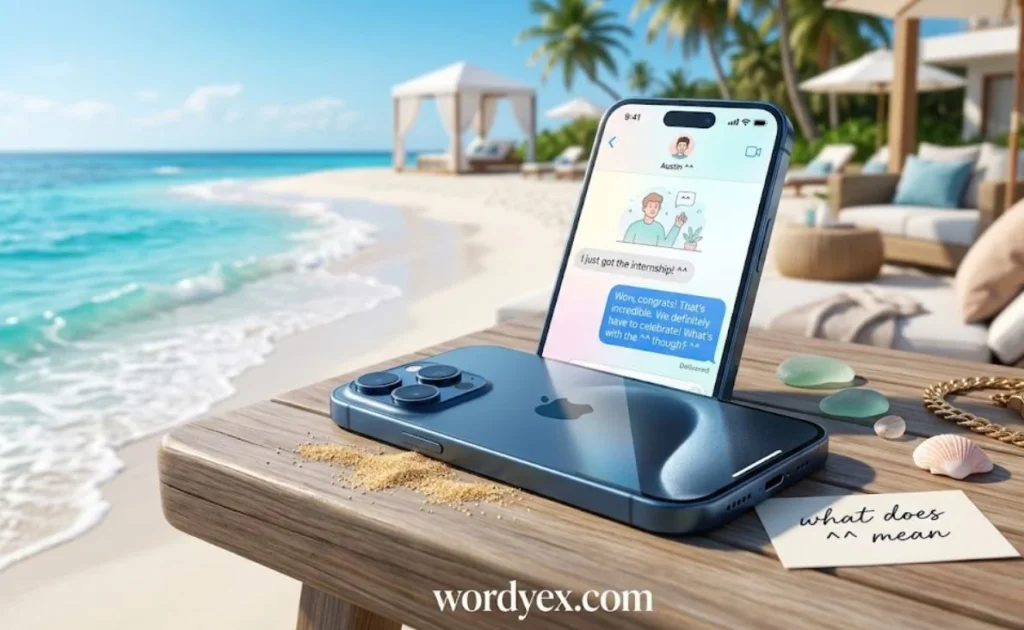
The texting symbol ^^ means happy, smiling, or crinkled eyes in digital communication. Originating from Eastern gaming culture and kaomoji emoticons, users send these twin carats in casual text messages, TikTok comments, or Discord chats to express genuine joy, warmth, and lighthearted contentment without emojis.
Why do people use the ^^ emoticon over emojis?
- Digital Minimalism: It offers a clean, text-based aesthetic preferred by Gen Z and Millennials who favor low-key expressions over bright, loud graphic icons.
- Effortless Typing: It is highly popular in American gaming and live streaming chats because typing two carats takes a fraction of a second during fast-paced interactions.
- Conversational Softening: It acts as a psychological safety cue in direct messages, instantly softening a plain sentence to ensure the tone is perceived as friendly and non-judgmental.
Digital culture moves incredibly fast, and just when you think you have a handle on modern texting shorthand, a tiny symbol pops up and changes the entire vibe of a conversation.
If you have been scrolling through your feeds or checking your direct messages lately, you have almost certainly run into the twin carats symbol.
What Does ^^ Mean?
The texting symbol ^^ primarily represents happy, smiling eyes in digital communication, mimicking the way eyes crinkle upward during a genuine laugh or smile.
It is used in casual text messages, gaming chats, and social media comments to convey warmth, happiness, excitement, or a lighthearted mood without using a standard emoji.
Decoding the Screen: Why We Search for Digital Shorthand
Have you ever stared at a text message for a solid two minutes trying to figure out if someone was being sweet, passive-aggressive, or just incredibly brief?
You are definitely not alone. Thousands of people search for the meaning of this symbol every single day because digital expressions can be incredibly ambiguous.
When someone sends a simple text, the lack of vocal tone, facial expressions, and hand gestures makes it incredibly easy to misinterpret the sender’s true intent. This specific symbol bridges that gap by offering a quick, text-based emotional cue that changes the entire weight of a sentence. Understanding these subtle nuances keeps you connected, prevents awkward social misunderstandings, and ensures your digital communication matches your real-world intent.
^^ – Quick Meaning
At its core, this symbol acts as a minimalist, text-based emoticon rather than a traditional graphic emoji. It captures a specific facial movement rather than an abstract concept.
- Primary Meaning: Happy, smiling, or crinkled eyes indicating joy or satisfaction.
- Secondary Meaning: An upward arrow pointing to a previous message or comment, signaling agreement.
- Tone: Friendly, approachable, casual, and universally lighthearted.
“I just finished my final exam! ^^”
“Thanks for helping me out with that project earlier. ^^”
“Can’t wait to see you guys at the game tonight! ^^”
Origin & Background
Long before we had high-definition smartphones packed with thousands of colorful, animated emojis, internet users had to get creative with the standard characters available on a basic computer keyboard. This symbol traces its roots directly back to early gaming culture and Eastern text-based emoticons, specifically Japanese kaomoji.
In traditional Western emoticons like 🙂 or :), you have to tilt your head to the side to see the face. Eastern kaomoji, however, are viewed straight on. In this style of digital art, the carats represent the upwardly curved eyes of an anime character experiencing intense happiness or laughing out loud.
As multiplayer online gaming exploded in the late 1990s and early 2000s, speed was everything. Typing out a full response in the middle of a fast-paced match could get your character eliminated. Gamers quickly adopted the twin carats as a lightning-fast way to type “good game” or show a friendly smile to teammates.
Over the last two decades, this symbol made a massive leap from niche gaming servers on Discord and Twitch straight into mainstream American social media platforms like TikTok, Instagram, and WhatsApp. It evolved from a gamer-specific shorthand into a highly popular, minimalist aesthetic favored by younger generations who prefer low-key, text-based expressions over bright, loud emojis.
Real-Life Conversations
Seeing how a symbol operates in the wild is the absolute best way to master its usage. Here are a few authentic, real-life messaging scenarios showing exactly how everyday Americans deploy this symbol in their daily digital lives.
Scenario 1: The TikTok Comment Section
Chloe: Your outfit styling videos are literally the only reason I know how to dress for spring.
Marcus: Ombré jackets are making a massive comeback this month! ^^
Scenario 2: Instagram DMs Between Friends
Hannah: Hey! Are we still on for grabbling coffee at that new spot downtown around noon?
Austin: Yes, absolutely! I’m already walking out the door right now. ^^
Scenario 3: Casual WhatsApp Group Chat
Tyler: Did anyone actually understand what the homework assignment is for history class?
Ryan: Just check the shared folder, I uploaded my lecture notes for everyone to use ^^
Scenario 4: A Late-Night Text Message Exchange
Sarah: Thanks for listening to me vent about my crazy work week earlier, I really needed it.
Emily: Anytime at all! That is exactly what best friends are here for. ^^
Why Is It Viral?
This symbol is experiencing a massive resurgence in American internet culture right now because of a broader cultural shift toward digital minimalism. While traditional emojis are great, they can occasionally feel overly expressive, loud, or even slightly performative to younger users.
Using basic keyboard symbols feels more effortless, authentic, and understated. It carries a certain “if you know, you know” energy that appeals directly to text-savvy crowds. It allows users to inject soft, genuine emotion into a conversation without the visual clutter of a bright yellow cartoon face.
Emotional & Psychological Meaning
From a psychological perspective, texting can feel remarkably cold and detached. When we talk in person, we constantly read micro-expressions to gauge comfort and safety. In the digital space, this symbol acts as a psychological safety net. It softens a sentence, signaling to the recipient that the conversation is a safe, friendly, and non-judgmental zone.
It expresses an emotion of pure, unforced contentment. It is the digital equivalent of a soft, warm crinkle around the eyes when you see someone you genuinely care about. It lacks the loud intensity of a laughing-crying emoji, offering instead a quiet space of comfort and shared understanding.
Imagine you are texting a coworker after a slightly stressful day, trying to coordinate a casual meetup. You want to show you are relaxed and completely fine, but typing “I am happy” feels incredibly stiff. Sending a quick message with these twin carats immediately lets them know your mood is bright, setting a completely relaxed tone for the rest of the evening.
Usage in Different Contexts
Context is absolutely everything when it comes to digital shorthand. A symbol that works beautifully in one app might feel completely bizarre or unprofessional in another.
Social Media
On platforms like TikTok, Instagram, and X, this symbol is a staple in comment sections. It is used to show appreciation for content creators, spread positive vibes, or connect casually with other users in the community. It is a quick way to keep the energy in the comments supportive and light.
Friends & Relationships
In close friendships and romantic relationships, the symbol acts as a soft emotional cushion. It can make a plain text feel incredibly sweet and affectionate. It shows your partner or your best friend that you are typing with a smile on your face, keeping the bond feeling close and connected.
Work & Professional Settings
This is where you need to exercise extreme caution. In formal workplace communications—like emails to clients, corporate announcements, or messages to upper management—this symbol should generally be avoided. It is simply too casual. However, if your team uses platforms like Slack for relaxed, internal watercooler chats, a well-placed carat pair can be fine among close peers, but it is always best to mirror the existing corporate culture.
Casual vs. Serious Tone
The symbol belongs exclusively to casual spaces. If a conversation turns toward a serious, sensitive, or deeply emotional topic, leave the symbols completely out of it. Using a lighthearted smiling-eyes symbol when someone is sharing bad news or expressing frustration can make you appear completely dismissive or emotionally detached.
When NOT to Use It
While this symbol is incredibly versatile, there are distinct boundaries you should respect to ensure your communication remains clear, effective, and completely respectful.
Avoid using it in high-stakes professional environments, legal correspondences, or academic assignments where crisp clarity is mandatory. You should also skip it during difficult conversations involving grief, apologies, or intense disagreements, as the symbol can easily trivialize serious human emotions.
Furthermore, make sure you are not overusing it in a single conversation. Sprinkling it at the end of every single sentence can make your writing feel repetitive, dilute its actual emotional value, and potentially distract the reader from the core message you are trying to share.
Common Misunderstandings
The absolute biggest mistake people make with this symbol is confusing its literal keyboard function with its figurative, emotional meaning. Because the carat symbol is used in mathematics to denote exponents or in editing to show an insertion, people completely unfamiliar with internet culture often assume it is a technical glitch, a typo, or an incomplete thought.
Another common point of confusion happens when a user types the symbols to literally point up at a previous text message. While it can certainly mean “look at the text above,” you have to read the context of the conversation to know the difference. If it stands completely alone or sits right next to a warm statement, it is always a face showing happy eyes.
Shorthand Comparison
To help you seamlessly navigate the vast world of text-based emoticons, let us look at how this symbol stacks up against other popular online expressions.
| Expression | Visual Representation | Core Emotional Vibe | Best Platform |
| ^^ | Crinkled, smiling eyes | Soft, understated joy | TikTok, Gaming Chats |
| 🙂 | Traditional sideways smile | Basic friendliness | Text Messages, Emails |
| xD | Eyes closed, laughing mouth | Intense amusement | Discord, Gaming |
| c: | Small, round happy face | Utter cuteness, innocence | Casual DMs |
| <3 | Classic sideways heart | Pure affection, deep love | Everywhere |
Key Insight
While a standard graphic emoji delivers an instant, pre-made visual punch, text-based keyboard emoticons require a tiny bit of imagination from the reader. This shared mental translation creates a much closer, more intimate, and uniquely human connection between the two people texting.
Variations & Types
Just like standard language, internet shorthand has a massive variety of dialects and subtle visual changes. Adding just one extra character can completely shift the mood.
- ^^The classic, minimalist double smile showing gentle warmth and low-key happiness.
- ^_^The complete Eastern kaomoji face, using an underscore to represent a cute, happy mouth.
- ^__^An elongated version of the classic face, indicating a wider, much more satisfied smile.
- ^^’The smiling eyes paired with a single apostrophe, representing a nervous sweat drop or sheepish embarrassment.
- ^^”Two sweat drops next to the smiling eyes, showing a higher level of social awkwardness or anxiety while smiling.
- ^^/The classic smiling face with a forward slash, mimicking a person enthusiastically waving their hand in the air.
- T__TAn entirely different emotion using carats horizontally, representing streams of heavy tears falling from closed eyes.
- ^.^Using a single period as a tiny button nose or small mouth, amplifying the overall cuteness of the expression.
- ^o^An incredibly excited variation where the “o” represents a wide-open mouth cheering out loud with pure joy.
How to Respond When Someone Uses It
When someone sends you this symbol, they are intentionally lowering their guard and offering a warm, friendly digital smile. Matching that exact energy keeps the conversation flowing smoothly. For a complete guide on mastering these modern conversational dynamics, explore the linguistic breakdowns over at Wordyex, which tracks evolving American slang trends.
Casual Replies
- “Love that for you! Let me know how it goes.”
- “That sounds perfect, talk to you soon.”
- “Awesome, thanks for sending that over.”
Funny Replies
- “Stop being so wholesome, it’s throwing off my vibe.”
- “I can literally feel the good energy radiating through my phone screen right now.”
- “Are you actually smiling like that in real life right now or are you lying to me?”
Mature Replies
- “I completely appreciate your help with this situation.”
- “Thank you for the warm update, I’m glad everything worked out so well.”
- “That is great news. I am incredibly happy to hear that.”
Respectful Replies
- “Thank you so much, your kindness truly means a lot.”
- “I am incredibly grateful for your time and guidance today.”
- “Much appreciated! Have a wonderful rest of your afternoon.”
Regional & Cultural Usage
The way people interpret digital symbols varies wildly depending on their cultural background, geographical location, and age group.
Western Culture
In the United States and Western Europe, the symbol is primarily viewed as a modern, minimalist alternative to standard emojis. It is frequently seen in creative circles, gaming environments, and casual internet communities where text-based aesthetics are highly valued.
Asian Culture
In countries like Japan, South Korea, and China, text-based expressions are deeply woven into everyday digital communication. Because these cultures place a high emphasis on eye expressions rather than mouth movements to read emotions, variations of this symbol are used across all age demographics, including professional settings. For those interested in the broader academic study of cross-cultural communication patterns, the Linguistic Society of America offers extensive research on how text-based language adapts globally.
Middle Eastern Culture
Across the Middle East, standard graphic emojis are still heavily preferred for expressing warmth and hospitality. While younger, tech-savvy individuals who consume global gaming content understand the twin carats perfectly, older generations might find the symbol confusing or completely miss the emotional meaning entirely.
Global Internet Usage
On global platforms like Discord, Steam, and Twitch, this symbol serves as a universal, boundary-free language. No matter what native language a player speaks, seeing those twin carats instantly communicates friendliness and mutual respect across the globe.
Generational Differences
The generation gap here is incredibly distinct. Millennials and Gen Z love using this symbol as an aesthetic, low-key way to express emotion without looking like they are trying too hard. Gen Alpha is completely transforming it into newer, hyper-specific gaming memes. On the flip side, older generations like Baby Boomers might look at the symbol and think it is an accidental formatting error or a stray markup tag from an app update.
Is It Safe for Kids?
Parents can breathe a massive sigh of relief here. This symbol is entirely safe, wholesome, and free of any hidden, malicious, or explicit double meanings. It is a completely innocent, creative expression of joy born directly out of internet culture. The only real risk is a minor communication barrier if a parent does not know what the symbol means, but a quick explanation easily clears that right up.
FAQs
Is ^^ an emoji or an emoticon?
It is officially classified as an emoticon. Emojis are pre-rendered, colorful graphic icons built directly into your phone’s keyboard software, whereas emoticons are creative faces constructed manually using standard, individual text characters.
Does ^^ mean the same thing as pointing up?
Not necessarily. While it can occasionally be used in a fast-paced group chat to literally point at a message directly above, its most common, widespread meaning across social media is a pair of happy, smiling eyes.
Why do gamers use ^^ so frequently?
Gamers use it because it is incredibly fast to type during live gameplay. Pressing the shift key and the carat key twice takes a fraction of a second, allowing players to show friendliness without interrupting their actions.
Is it professional to use ^^ in a business email?
No, it is generally considered far too casual for formal business communication. It is best to stick to standard, professional written English in workplace emails to ensure your tone remains completely clear and authoritative.
What is the difference between ^^ and ^_^?
The double carats are a minimalist, shorthand version that focuses entirely on the smiling eyes. The longer version includes an underscore in the middle to give the emoticon a clear, visible smiling mouth.
Can I use ^^ on any texting app?
Yes, absolutely. Because it is made entirely of standard keyboard characters rather than a specific software graphic, it will display perfectly on every single device, operating system, and messaging platform in the world.
Final Thought
At the end of the day, digital language is a living, breathing thing that changes every single time we log online. Tiny symbols like the twin carats prove that humans will always find creative, meaningful ways to inject warmth and genuine emotion into cold digital screens.
Do not be afraid to experiment with these subtle shifts in your daily conversations. Lean into the natural rhythm of modern text shorthand, match the energy of the people you are talking to, and use your new linguistic knowledge to communicate with absolute confidence.