Decoding the Internet’s Most Misunderstood Slang
Isk meaning, language moves faster than we do. One day you are comfortable with the local lingo, and the next, your phone screen is glowing with a three-letter acronym that makes you feel like you’ve missed a decade of cultural evolution.
If you’ve seen “isk” popping up in your DMs or comment sections and felt a wave of confusion, you aren’t alone.
We live in an era of “digital shorthand.” We trim words to save time, but in doing so, we often add layers of emotional subtext that a dictionary can’t catch.
isk meaning
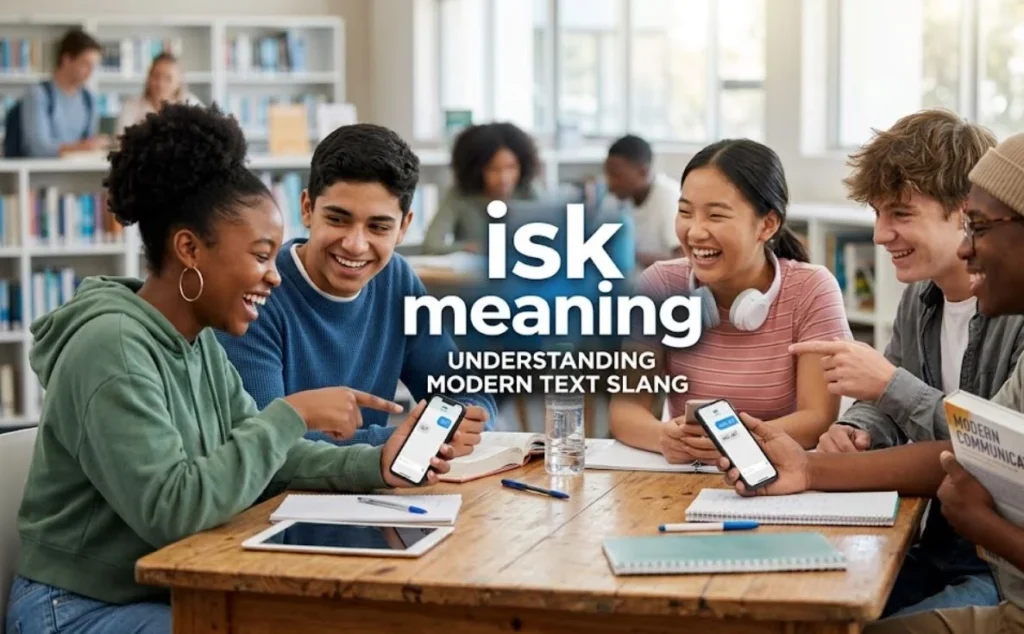
Understanding the isk meaning isn’t just about translating letters; it’s about reading the room in a digital space.
Whether you are trying to keep up with your kids, understand a colleague’s casual text, or simply improve your online fluency, let’s break down exactly what this term signifies and how to use it without the “cringe” factor.
isk Meaning – A Quick Definition
At its core, isk is a phonetic slang variation of the phrase “is it?” or “is that so?”
In the world of fast-paced texting, it serves as a multipurpose reaction. Depending on the punctuation (or lack thereof), it can signal genuine curiosity, biting sarcasm, or even mild annoyance.
- The Sarcastic “Isk”: Used when someone says something obvious.
- The Genuine “Isk”: Used to seek confirmation in a casual tone.
- The Softened “Isk”: Used to make a question sound less confrontational.
Example 1: “You’re actually going to wear that to the party? Isk?”
Example 2: “Wait, she really said that? Isk??”
Example 3: “He thinks he’s the best player on the team. Isk.”
Origin & Background
The evolution of “isk” is a fascinating study in linguistic economy. It didn’t start in a boardroom; it started in the streets and migrated to the keyboard.
The Phonetic Shift
Culturally, “isk” draws heavily from Multicultural London English (MLE) and various urban dialects where “Is it?” is shortened and softened. Over time, the “t” sound at the end was dropped entirely, replaced by a sharp “k” sound that felt more punchy and definitive in text form.
Social Media Impact
TikTok and Instagram acted as accelerators. When creators started using “isk” in captions to spark engagement (e.g., “Best burger in the city… isk?”), it transformed from a regional spoken habit into a global digital identifier. It represents a shift from formal English to a more “vibe-based” communication style.
Real-Life Conversations
To truly grasp how “isk” functions, you have to see it in its natural habitat. Here are a few scenarios where the meaning shifts based on the relationship.
Scenario 1: The Instagram DM (Sarcasm)
Person A: Just posted my workout. Feeling like a beast today.
Person B: Isk? You were only in the gym for ten minutes.
Scenario 2: The WhatsApp Group (Gossip)
Person A: I heard Sarah and James broke up last night.
Person B: Isk?? They were literally just on vacation together.
Scenario 3: The TikTok Comment (Doubt)
Person A: (In video) This hack will save you 5 hours a week!
Person B: Isk… looks like it takes more work than the original way.
Scenario 4: The Late Night Text (Vulnerability)
Person A: I think I’m actually starting to like him.
Person B: Isk? I thought you said he was annoying last week.
The Emotional & Psychological Meaning
Why do we use “isk” instead of just saying “Really?” or “Are you sure?”
Psychologically, “isk” acts as a social buffer. Traditional questions can sometimes feel like an interrogation. By using “isk,” the speaker lowers the stakes. It’s a way of challenging a statement while maintaining a “cool” or detached exterior.
In my years of studying communication patterns, I’ve noticed that modern speakers—especially Gen Z—prioritize emotional efficiency. We want to convey maximum skepticism with minimum effort. Using “isk” reveals a desire to stay connected to the “now” without sounding overly formal or “boomer-ish.”
A Personal Scenario:
I remember texting a younger cousin about a supposedly “life-changing” coffee brand. I sent a long paragraph explaining the flavor notes. Her reply? Just “Isk.” At first, I felt dismissed. But then I realized that was her way of playfully challenging my enthusiasm. It wasn’t an insult; it was an invitation to prove my point.
Usage in Different Contexts
Social Media
On platforms like TikTok, “isk” is often used to “check” someone’s ego. It’s the digital equivalent of an arched eyebrow.
Friends & Relationships
Among friends, it’s almost exclusively playful. However, in a relationship, be careful. An “isk” during a serious argument can come across as dismissive or “gaslighting” if the other person is trying to be vulnerable.
Work / Professional Settings
Avoid it. Unless you work in an incredibly creative, youth-centric agency where slang is the norm, “isk” has no place in an email to a manager. It lacks the professional weight required for workplace clarity.
When NOT to Use It
While it’s a fun term, “isk” can backfire.
- In Times of Grief: If someone shares bad news, “isk” sounds incredibly cold. Stick to “I’m so sorry” or “Are you okay?”
- With Non-Native Speakers: Since this is highly idiomatic, it can lead to massive confusion for those still mastering standard English.
- Formal Documentation: Never use it in academic or legal contexts.
Common Misunderstandings
The biggest mistake people make is taking “isk” literally. Some believe it’s a typo for “ask” or “risk.” It isn’t.
Another misconception is that it always implies a “No.” Sometimes, “isk” is actually a “Yes, keep talking.” It’s a prompt for more information. If you misread the tone, you might end up ending a conversation that the other person actually wanted to continue.
Comparison Table: Isk vs. The Rest
| Expression | Vibe | Best Use Case |
| Isk | Sarcastic/Casual | Challenging a friend’s claim. |
| For real? | Authentic | Genuine surprise or shock. |
| Cap | Accusatory | Calling out a blatant lie. |
| Bet | Agreement | Saying “okay” or “deal.” |
| Word? | Curious | Old-school way of asking for confirmation. |
Key Insight: While “For real” seeks the truth, “isk” questions the validity of the speaker’s perspective. It’s more about the person’s opinion than the facts themselves.
10 Variations of “Isk” You Should Know
- Isk? (The standard question) – “Is it true?”
- Isk… (The trailing doubt) – “I’m not so sure about that.”
- Isk! (The exclamation) – “I can’t believe it!”
- Iskisk (The double-tap) – Used for heavy emphasis or mocking.
- Big Isk – Reserved for when someone tells a massive lie.
- Isk though? – Adding “though” makes the skepticism more pointed.
- Isk really – A more “street” version of “Is it really?”
- Pure Isk – When a situation is entirely unbelievable.
- Isk man – Adding a casual address to soften the blow.
- Not the isk – Used when someone tries to use the slang incorrectly.
How to Respond When Someone Uses It
If you are on the receiving end of an “isk,” don’t panic. Here is how to handle it:
- Casual: “Yeah, dead serious lol.”
- Funny: “Isk! Don’t act like you didn’t know.”
- Mature: “I know it sounds wild, but that’s the situation.”
- Respectful: “I understand the doubt, let me explain.”
If you find yourself struggling with more complex English nuances beyond slang, checking out resources like Wordyex can help you bridge the gap between casual talk and professional mastery.
Regional & Cultural Usage
- Western Culture (UK/US): Predominantly used in London-centric circles or by Gen Z in the US who consume British media.
- Asian/Middle Eastern Culture: Rarely used in local dialects but seen frequently among international school students and influencers who follow Western trends.
- Generational Divide: Millennials might still use “Really?” or “Is it?”, while Gen Z has almost entirely shifted to “isk” for the sake of brevity.
Is It Safe for Kids?
Yes. “Isk” is generally “clean” slang. It doesn’t have any inherent profane meaning or adult undertones. It’s simply a linguistic shortcut. The only risk is the “attitude” it carries, which parents might find slightly disrespectful if used in a domestic setting.
FAQs
Q: Is “isk” an acronym?
A: No, it is a phonetic spelling of “Is it?”
Q: Does “isk” mean the same thing as “cap”?
A: Not quite. “Cap” means you are lying. “Isk” is asking if you are serious or questioning your logic.
Q: Can I use “isk” in a business text?
A: It is highly discouraged. Stick to “Is that correct?”
Q: Is it “Isk” or “Is it”?
A: Both are correct. “Isk” is just the “slangified” version used primarily in text.
Q: Is “isk” related to the Icelandic Króna (currency)?
A: In a financial context, yes (ISK is the currency code). In a social media context, no.
Conclusion
At the end of the day, language is a living, breathing thing. The isk meaning may seem trivial, but it represents how we connect in a fast-paced world. It’s about more than just three letters; it’s about the nuances of doubt, the playfulness of friendship, and the ever-changing landscape of human expression.
Don’t be afraid to use it—or to ask for clarification when you see it. Communication is a bridge, not a wall. Whether you say “Is it?” or “Isk,” the goal is the same: to be understood and to stay connected. Embrace the evolution, keep your conversations authentic, and never stop learning the “why” behind the “what.”