The Real Meaning Behind This Popular Text Slang
If you spend time on TikTok, Snapchat, Instagram, or texting friends, you’ve probably seen someone type “WTM” and wondered what it actually means.
At first glance, it can feel confusing. Some people use it casually in chats, while others drop it in captions, stories, or comments without explanation. That leaves many people searching online for the real meaning behind the slang.
The good news is that WTM is actually simple once you understand the context.
In modern texting culture, short forms like WTM help people communicate faster while still sounding relaxed and social.
But depending on who says it and where it’s used, the tone can shift from friendly to flirtatious, curious, or even serious.
This guide breaks everything down in plain English so you can confidently understand and use WTM in real conversations without sounding awkward or out of touch.
WTM Meaning – Quick Definition
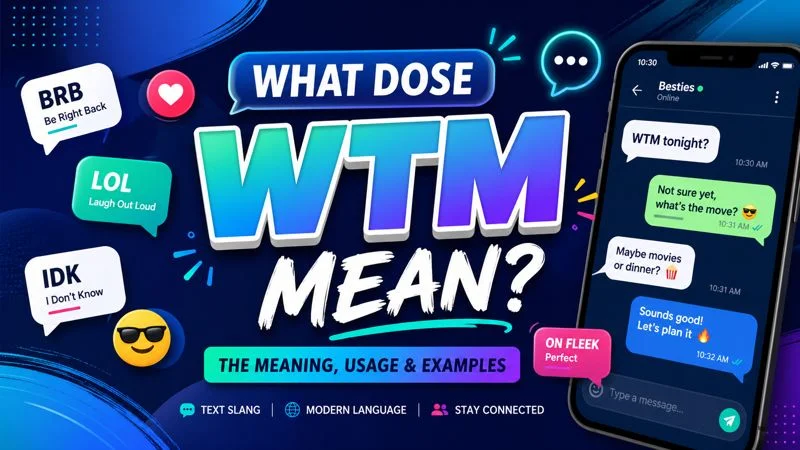
WTM usually means: “What’s The Move?”
People use it when asking:
- What’s happening?
- What are the plans?
- Where is everyone going?
- What should we do next?
It’s often used in casual texting and social media conversations.
Simple Examples
“WTM tonight?”
“Yo, WTM after class?”
“I’m bored. WTM?”
In most cases, the phrase is social and relaxed. It’s basically a modern way of asking what everyone is doing.
The Origin & Background of WTM
WTM became popular through texting culture and social media apps, especially among younger users.
The phrase “What’s the move?” existed in spoken English long before it became internet slang. People used it casually while making plans with friends. Over time, texting shortened it into WTM for speed and convenience.
As platforms like TikTok, Snapchat, Instagram, and Twitter grew, short acronyms became part of everyday communication. People wanted messages to feel fast, effortless, and emotionally expressive.
WTM spread quickly because it works in many situations:
- Planning a hangout
- Starting a conversation
- Checking someone’s mood
- Rekindling communication
- Flirting casually
Social media also changed how people communicate emotionally. Instead of writing long paragraphs, users now rely on short expressions that carry social meaning.
WTM became popular because it sounds casual but still creates connection.
If you enjoy learning modern internet phrases and texting culture, you can also explore more slang guides on WordyEx through this helpful article section, wordyex.com
Real-Life Conversations Using WTM
WhatsApp Conversation
Person A:
WTM tonight?
Person B:
Probably grabbing food with the group. You coming?
Person A:
Yeah, send location.
Instagram DM
Person A:
You disappeared all weekend 😭 WTM now?
Person B:
Just chilling at home honestly.
TikTok Comments
Person A:
This party looks mad 😭
Person B:
Fr bro WTM next weekend?
Text Message
Person A:
I finished exams finally.
Person B:
Ayy congrats 😂 WTM tonight then?
These examples show how naturally WTM fits into casual digital communication.
Emotional & Psychological Meaning of WTM
WTM is more than just a planning question.
Emotionally, it often signals one of these things:
- A desire for connection
- Curiosity
- Social interest
- Loneliness
- Excitement
- Boredom
When someone texts “WTM,” they’re usually opening a social door. They want interaction without sounding too formal or needy.
That’s one reason the phrase feels so modern. It creates closeness while keeping the tone relaxed.
For example, imagine someone hasn’t spoken to an old friend in months. Instead of writing a long emotional message, they simply text:
“WTM this weekend?”
That short phrase quietly says:
- “I miss talking.”
- “I want to reconnect.”
- “Are you available?”
Modern communication often hides emotions behind casual wording. WTM is a perfect example of that shift.
Usage of WTM in Different Contexts
Social Media
On TikTok or Snapchat, WTM usually means:
- What’s happening?
- What’s everyone doing?
- Any plans?
People use it in captions, stories, or comments to invite interaction.
Example:
“Saturday night and I’m bored. WTM?”
Friends & Relationships
Among friends, it’s mostly about making plans.
In relationships, though, it can become flirtatious.
Example:
“WTM later? Miss you.”
That version carries emotional warmth and interest.
Work or Professional Settings
WTM is generally not appropriate for formal communication.
Avoid using it in:
- Emails
- Job applications
- Business meetings
- Professional client chats
Instead, use clear phrases like:
- “What’s the plan?”
- “What would you like to do next?”
- “What’s scheduled?”
Casual vs Serious Tone
WTM is naturally casual.
It works best in:
- Friend groups
- Informal texting
- Online conversations
- Youth culture
It can sound immature or confusing in serious conversations.
When NOT to Use WTM
There are situations where using WTM may create confusion or seem disrespectful.
Avoid It In:
Formal communication
Using slang in professional environments can appear careless.
Sensitive situations
If someone is upset or grieving, casual slang may feel emotionally disconnected.
Cross-generational conversations
Older adults may not recognize the meaning.
Serious relationship discussions
If emotional clarity matters, short slang can feel dismissive.
Example:
Instead of:
“WTM about our issue?”
Say:
“Can we talk seriously about what happened?”
Tone matters.
Common Misunderstandings About WTM
Many people misunderstand WTM because acronyms can have multiple meanings online.
Common Confusions
Some think it means:
- “What’s the matter?”
- “What’s the meaning?”
- “What they mean?”
But in texting culture, the most common meaning is still:
“What’s the move?”
Tone Confusion
Sometimes WTM sounds friendly.
Other times, it sounds flirtatious.
Context changes everything.
Example:
“WTM tonight?”
Friendly.
“WTM later 👀”
Potentially flirtatious.
Emoji choice also changes interpretation.
Comparison Table
| Expression | Meaning | Tone | Common Usage |
|---|---|---|---|
| WTM | What’s the move? | Casual | Making plans |
| WYD | What are you doing? | Friendly | Starting conversation |
| HMU | Hit me up | Open/social | Invitation |
| WYA | Where you at? | Direct | Asking location |
| IDC | I don’t care | Dismissive | Emotional reaction |
| BRB | Be right back | Neutral | Temporary absence |
| Let’s chill | Relax together | Friendly/flirty | Hanging out |
| No plans | Opposite vibe | Passive | Staying inactive |
Key Insight
WTM stands out because it combines curiosity, social energy, and invitation in just three letters. That’s why it remains popular across multiple platforms.
Variations & Similar Expressions
1. WYD
“What are you doing?”
Used to start casual conversation.
2. WYA
“Where you at?”
Usually asks someone’s location.
3. HMU
“Hit me up.”
Means contact me later.
4. LMK
“Let me know.”
Used when waiting for updates.
5. TBH
“To be honest.”
Signals honesty or opinion.
6. IDC
“I don’t care.”
Shows emotional indifference.
7. FR
“For real.”
Used for agreement or emphasis.
8. NGL
“Not gonna lie.”
Introduces honesty or confession.
9. Bet
Means “okay” or “agreed.”
Popular in Gen Z conversations.
10. Say less
Means “I understand” or “done.”
Often used confidently.
How to Respond When Someone Uses It
Casual Replies
- “Just chilling.”
- “Nothing much honestly.”
- “Thinking about getting food.”
Funny Replies
- “Trying to survive adulthood 😭”
- “Currently fighting my sleep schedule.”
- “The move is snacks and zero responsibilities.”
Mature Replies
- “I’m free later if you want to catch up.”
- “Probably staying home tonight.”
- “I have work tomorrow, so keeping it calm.”
Respectful Replies
- “Not much planned yet, what did you have in mind?”
- “I’m spending time with family tonight.”
- “Thanks for asking.”
Your response should match the relationship and mood of the conversation.
Regional & Cultural Usage of WTM
Western Culture
In the US and UK, WTM is heavily connected to youth culture and social activity.
It often relates to:
- Parties
- Hangouts
- Weekend plans
- Dating culture
Asian Culture
In many Asian countries, English slang is common online, but not everyone understands abbreviations equally.
WTM is more popular among:
- Younger users
- Gamers
- Social media communities
Middle Eastern Culture
Usage exists mainly among bilingual internet users.
Tone is often more careful because casual slang may feel too informal in certain social settings.
Global Internet Usage
TikTok and Instagram helped standardize slang worldwide.
Now, users from different countries recognize expressions like:
- WTM
- WYD
- FR
- LOL
Internet culture created a shared digital language.
Gen Z vs Millennials
Gen Z
Uses WTM naturally and frequently.
Millennials
Usually understand it but may use complete sentences more often.
Communication styles evolve with technology and social trends.
Is It Safe for Kids?
WTM itself is generally harmless.
It usually means:
“What’s the plan?” or “What’s happening?”
However, parents should still understand context.
Online slang changes quickly, and some conversations may involve:
- Strangers
- Peer pressure
- Late-night meetups
- Risky social situations
The phrase itself is not dangerous, but awareness matters.
Frequently Asked Questions
What does WTM mean in texting?
WTM usually means “What’s the move?” It’s used to ask about plans or activities.
Is WTM flirtatious?
Sometimes. The meaning depends on tone, emojis, and relationship context.
What does WTM mean on Snapchat?
On Snapchat, it commonly means:
- What’s happening?
- Any plans?
- What are we doing?
Is WTM rude?
No. It’s generally casual and friendly.
Can adults use WTM?
Yes, but it’s most common among younger internet users.
Does WTM have multiple meanings?
Yes. Different communities may interpret it differently, but “What’s the move?” is the most popular meaning.
Should I use WTM at work?
Usually no. Professional communication should stay clear and formal.
Conclusion
WTM may look like a small internet acronym, but it reflects something much bigger about modern communication.
People today want conversations to feel:
- Fast
- Casual
- Emotionally light
- Socially connected
That’s why phrases like WTM became so popular.
At its core, WTM is simply a modern way of asking:
“What’s going on?”
“What are we doing?”
“Do you want to connect?”
Understanding slang like this helps you communicate more naturally online without feeling confused or left behind.
And once you understand the tone behind it, using WTM becomes easy and surprisingly human.