What Does DWBI Mean?
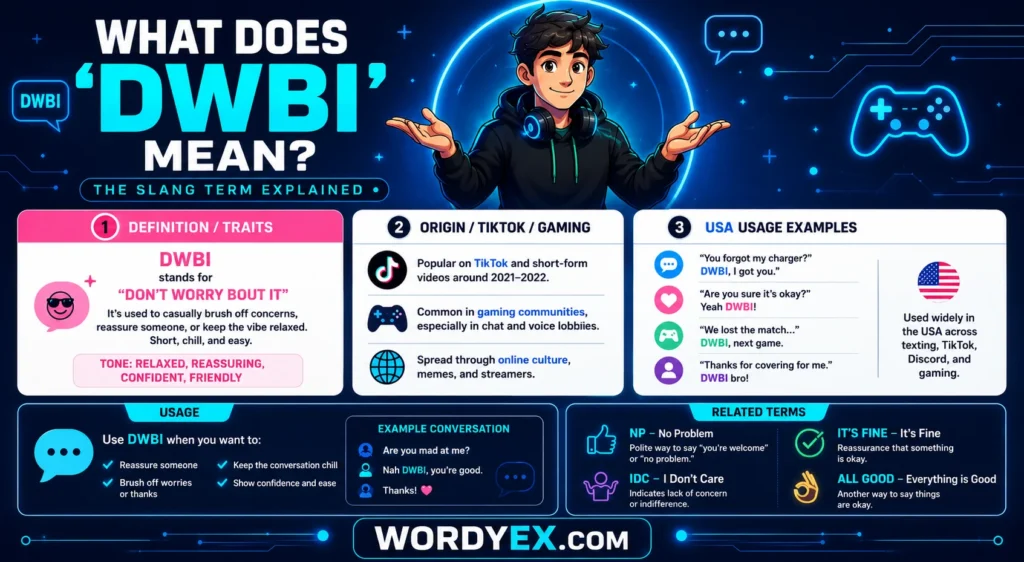
In digital communication, DWBI is an acronym that stands for “Don’t worry ’bout it” or “Don’t worry about it.” Texting loops use this fast-paced shorthand to reassure someone, brush off an apology, or indicate that a situation is completely under control.
Strong Introduction
Navigating the ever-shifting world of American texting slang can feel like decoding a secret message. One minute you are mastering standard abbreviations, and the next, a four-letter combination pops up on your screen that leaves you scratching your head.
If you have recently received a quick text message containing those exact letters, you are certainly not alone in searching for clarity.
Modern smartphones and chat applications have transformed how we share our thoughts, pushing us to minimize keystrokes while maximizing emotional delivery. People constantly look up these niche acronyms because missing the subtle emotional shift behind a short text can completely change the vibe of a conversation. Misinterpreting a tiny phrase can turn a relaxed reassurance into perceived coldness or irritation.
This specific guide unpacks the exact layers of this popular slang term, resolving the common confusion between genuine digital comfort and casual dismissiveness. By understanding its social weight, you can confidently steer your daily digital chats without feeling left behind by changing language trends.
DWBI – Quick Meaning
At its core, the slang phrase functions as a digital wave of the hand, telling the recipient that everything is perfectly fine. It serves as a rapid-fire method to ease someone’s anxiety, accept a casual apology, or politely decline an offer of help without dragging out the conversation. Instead of typing out multiple individual words, younger smartphone users deploy this compact acronym to keep the texting energy moving forward.
“Hey, sorry I forgot to return your jacket today!”
“DWBI, just bring it whenever you can!”
“Do I need to stop by the grocery store for dinner?”
“DWBI, I already grabbed everything we need.”
“My phone died and I missed your stream earlier, my bad!”
“DWBI at all, the VOD is already posted anyway.”
Origin & Background
The roots of this expression tie back to early internet relay chat networks and basic cell phone text messaging, where characters were strictly limited and typing took significant effort. As shorthand options like “DW” for “Don’t Worry” became permanent fixtures in our vocabulary, text shorthand naturally expanded to capture full spoken phrases. The addition of the last two letters directly mirrors the relaxed, phonetic flow of spoken American English, transforming “about it” into a smooth, singular concept.
With the massive explosion of short-form video platforms like TikTok, the phrase found new life among digital subcultures who value hyper-efficient messaging. Creators and commentators frequently drop the acronym into comment sections to tell fans not to stress over minor editing mistakes or missed schedules. Over time, it evolved from a simple technical shortcut into a widespread social signifier of an easygoing, unbothered attitude.
Real-Life Conversations
Example 1: WhatsApp Group Chat
John: Hey everyone, I might be ten minutes late to the movie because traffic on the highway is completely backed up.
Tony: DWBI man, the previews always take forever to finish anyway so you will make it right on time.
Example 2: Instagram DM
Chloe: I am so incredibly sorry for leaving you on read yesterday afternoon, my work shift got absolutely chaotic.
Maya: Girl DWBI! I figured you were just busy dealing with real life, we are totally good.
Example 3: TikTok Comments
Liam: Wait, did I completely misunderstand the joke at the end of your new video?
Noah: DWBI it is a super niche reference from an old movie, half the comment section is confused too.
Example 4: Text Message
Ethan: Do you want me to Venmo you right now for my share of the pizza we ordered last night?
Lucas: DWBI for real, you can just pick up the tab the next time we go out to grab lunch.
The phrase remains incredibly viral in American text culture because it satisfies the modern craving for effortless, low-friction interactions. In a fast-paced world where everyone experiences minor text anxiety, a quick reassurance acts as a social safety valve. It allows people to stay connected and supportive without requiring lengthy, emotionally demanding explanations.
Emotional & Psychological Meaning
Using this acronym sends a specific psychological signal that prioritizing peace and speed matters more than overanalyzing a minor social hiccup. It projects a casual, relaxed boundary that prevents small issues from snowballing into unnecessary digital drama. When a sender selects these letters, they are deliberately projecting an aura of emotional stability and understanding.
Modern digital communication moves so quickly that typing lengthy paragraphs of reassurance can sometimes make a minor problem feel much larger than it actually is. By compressing the sentiment, the sender actively defuses potential overthinking on the other side of the screen. It is a linguistic tool designed to maintain a smooth emotional equilibrium between friends.
I remember a situation last summer when an intern at my content office accidentally sent a rough draft to a major client before I could review it. She sent me a massive, frantic paragraph apologizing for the oversight and spiraling into total panic. I immediately texted back a simple message to break her anxiety loop, and the instant relief she felt completely saved her productivity for the rest of the afternoon.
Usage in Different Contexts
On social media platforms, the term acts as a universal shield against public embarrassment or minor criticism in the public view. It is commonly spotted in the comment threads of lifestyle influencers and gaming streamers to keep the community vibe lighthearted and positive. Users deploy it to quickly brush away awkward moments before they attract unwanted attention.
Within close friendships and romantic relationships, the phrase establishes a safe zone where minor mistakes do not require elaborate apologies. It reinforces the idea that the bond is strong enough to handle small scheduling delays or forgotten tasks without friction. It keeps everyday text exchanges feeling light, supportive, and fundamentally stress-free.
However, bringing this slang phrase into professional or office communication settings is highly risky and generally discouraged. Slack messages or emails to supervisors demand a level of formal clarity that casual acronyms simply cannot provide. Using it with a corporate client might make you look careless, detached, or dismissive of their legitimate business concerns.
The overall tone changes dramatically based on punctuation and placement within your message thread. Leaving the letters entirely on their own without an emoji can sometimes feel brief to the point of being slightly passive-aggressive. Pairing the phrase with a laughing emoji or a warm exclamation point ensures the recipient feels the genuine warmth behind your message.
When NOT to Use It
You should strictly avoid using this shorthand during serious emotional crises or major relationship discussions where real empathy is required. If a close friend is opening up about a deep personal loss or a significant life setback, replying with a brief acronym feels incredibly cold and thoughtless. In those critical moments, turning to deep language platforms like Wordyex can help you discover much better ways to articulate authentic human support.
It is also important to recognize how cultural differences affect how people receive short messages across the digital landscape. Individuals from backgrounds that value elaborate, formal politeness might view compressed slang as a direct sign of disrespect or social laziness. Always match your language choices to the comfort level and background of the person you are messaging.
Common Misunderstandings
The most frequent blunder people make with this acronym is assuming the sender is secretly angry or attempting to shut down the conversation. Because digital text lacks physical vocal inflections, a short phrase can easily be misread as an icy brush-off. It is vital to look at the larger pattern of the friendship rather than panicking over a single short reply.
Another common point of confusion stems from mixing up the literal definition with a figurative, sarcastic application. Sometimes, someone might say it when they are actually feeling slightly overwhelmed but want to avoid asking for help out of pride. Paying close attention to the surrounding context clues will always help you determine the true intention behind the screen.
Comparison Table
| Slang Term | Core Meaning | Typical Emotional Vibe | Best Use Case |
| DWBI | Don’t worry ’bout it | Casual, reassuring, friendly | Brushing off minor mistakes |
| NBD | No big deal | Indifferent, calm, steady | Minimizing an event’s impact |
| NW | No worries | Globally recognized, warm | Standard polite acknowledgment |
| IDC | I don’t care | Blunt, direct, sometimes cold | Expressing true indifference |
Key Insight: While all of these terms aim to reduce conversational tension, DWBI carries a distinctly personal, slang-forward energy that works best among peers who share a casual, modern communication style.
Variations & Types
- DWBI AT ALL: An amplified version that emphasizes absolute reassurance to ensure the recipient feels zero lingering guilt.
- DWBTI: A slight spelling shift that spells out “Don’t worry about it” more thoroughly across the digital keyboard.
- DWBJH: Meaning “Don’t worry, be happy,” drawing directly from classic pop culture expressions of peace.
- DWB: A truncated version meaning “Don’t worry ’bout,” usually followed immediately by a specific topic or person’s name.
- DWBI FR: Short for “Don’t worry about it for real,” adding a layer of deep sincerity to the quick message.
- DWBI LMAO: A lighthearted variation used when the mistake in question is actually funny to both individuals.
- DWBIM: Meaning “Don’t worry about it man,” adding a traditionally masculine or highly casual ending to the chat.
- DWBI BESTIE: A popular variation among young women to maintain a warm, affectionate tone during a quick exchange.
How to Respond When Someone Uses It
Casual Reply: "Awesome, thanks for understanding! See you at the spot later tonight."
Funny Reply: "Phew! I was already planning my witness protection escape route, glad we are good."
Mature Reply: "I appreciate your flexibility on this. I will definitely make sure it doesn't happen again."
Respectful Reply: "Thank you for being so patient with me, it really means a lot."
Regional & Cultural Usage
Across North America, the phrase thrives in urban centers and digital spaces where communication trends shift rapidly month by month. It aligns perfectly with the fast-paced lifestyle of younger Americans who prefer to process information in quick, impactful bursts. The phrasing reflects a cultural desire to keep social interactions completely streamlined and highly efficient.
In contrast, many traditional international communities approach these compressed internet phrases with a healthy dose of skepticism. For instance, in many European and Asian communication circles, text clarity and proper sentence structure show respect for the person reading the message. For a broader perspective on language evolution globally, reviewing official digital literacy data on the National Center for Education Statistics showcases how modern literacy patterns continue to adapt.
Linguistic gaps also appear prominently across different generations within the United States. Gen Z and Gen Alpha users view these acronyms as completely natural elements of daily expression, often using them without a second thought. Millennials might use them occasionally for speed, while Baby Boomers frequently find them confusing and prefer typing complete, punctuated sentences.
Is It Safe for Kids?
The acronym is entirely safe for teenagers and younger children to use in their everyday group chats and social media interactions. It contains absolutely no hidden vulgarity, malicious intent, or inappropriate references that parents need to worry about. It is simply a harmless linguistic shortcut designed to save time while typing on virtual keyboards.
FAQs
Can I use DWBI in a professional business email?
No, it is highly recommended to avoid this slang term in professional communications because it can easily be viewed as lazy or unprofessional by management.
Does DWBI mean the person is secretly annoyed with me?
Almost never, as the term is genuinely designed to offer quick comfort and prevent the recipient from overthinking a minor issue.
What is the main difference between DW and DWBI?
DW simply means “Don’t Worry,” while DWBI adds “About It,” focusing the reassurance directly onto a specific event or mistake.
Is this term used more on TikTok or text messages?
It is used equally across both mediums, serving as a comment section shortcut on TikTok and a quick text reply on messaging apps.
How do older generations view this specific acronym?
Older generations often find it confusing because they are less familiar with modern texting shortcuts and prefer full sentences.
Final Thought
DWBI is one of many informal texting shortcuts. Explore related abbreviations in the Wordyex Texting Slang Dictionary.