What Does MMS Mean?
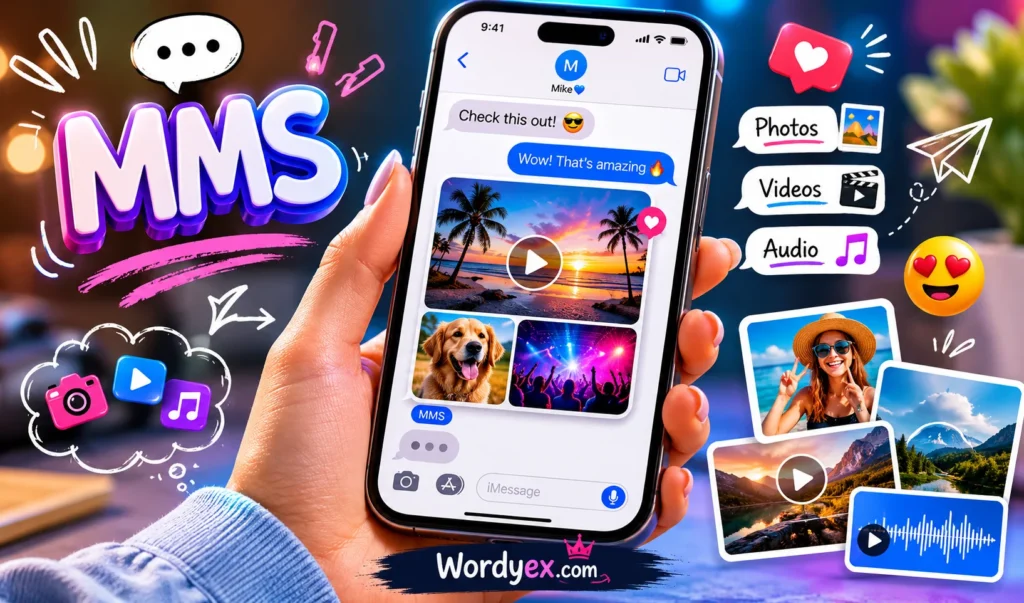
MMS stands for Multimedia Messaging Service, a messaging format that allows users to send photos, videos, audio clips, GIFs, and other media through text messages. In modern online conversations, the meaning of MMS can also refer to sharing visual content, media messages, or memorable digital moments between people.
People often search for the meaning of MMS because the term appears in text messages, social media conversations, online slang discussions, and smartphone settings.
If you’ve ever received a message containing a photo, video, meme, or voice recording, chances are you’ve used MMS without even thinking about it.
Although newer messaging apps dominate daily communication, MMS remains a common term across smartphones, online discussions, and internet culture. Many people encounter the acronym and wonder whether it has a hidden slang meaning or simply refers to a messaging technology.
Understanding the meaning of MMS helps clear up confusion and makes online communication easier to navigate. Whether you’re texting friends, scrolling through social media, or troubleshooting phone settings, knowing what MMS means can save time and avoid misunderstandings.
Meaning of MMS – Quick Meaning
MMS means Multimedia Messaging Service.
Quick facts:
- Allows sending images, videos, GIFs, and audio through text messages.
- Works through mobile networks.
- An upgrade from traditional SMS (Short Message Service).
- Commonly used on smartphones worldwide.
Examples:
“Can you send that picture through MMS?”
“My phone isn’t downloading MMS messages.”
“I got an MMS from my cousin with vacation photos.”
Origin & Background
The meaning of MMS originated in the early 2000s when mobile phone technology evolved beyond simple text messaging.
Before smartphones became common, SMS allowed only plain text communication. Mobile carriers introduced MMS so users could exchange pictures, sounds, and videos.
As internet culture expanded, MMS became associated with sharing memorable moments digitally. Social media platforms eventually reduced reliance on MMS, but the term remained part of everyday technology language.
The rise of smartphones, viral content, and instant communication helped keep MMS relevant. Even in 2026, people still encounter MMS settings, notifications, and conversations across different devices.
Social media has also influenced how people understand MMS. Younger users may see it as a way of sharing media directly, while older users recognize it as a specific mobile messaging service.
Real-Life Conversations
WhatsApp Conversation
John A:
Did you get the concert photo?
Tony B:
Not on WhatsApp. Send it through MMS.
John A:
Sure, sending it now.
Instagram DM
Sarah A:
That puppy video is adorable.
Emma B:
I know! My aunt originally sent it as an MMS.
Sarah A:
Glad she did. It made my day.
TikTok Comments
Alex A:
Why won’t the image load?
Chris B:
Looks like it’s an MMS attachment.
Alex A:
That explains it.
Text Message
Lisa A:
I just sent grandma the birthday pictures.
Rachel B:
Through MMS?
Lisa A:
Yep. She still prefers regular texting.
Why Is It Viral?
MMS continues trending because people frequently encounter the term when switching devices, troubleshooting messaging issues, or discussing digital communication.
Interest also rises whenever online users compare SMS, MMS, iMessage, and messaging apps. Curiosity about communication technology keeps searches for the meaning of MMS consistently popular in the United States.
Emotional & Psychological Meaning
At its core, MMS represents something more personal than plain text.
A photo captures a memory.
A video preserves a moment.
A voice note conveys emotion.
Because multimedia carries emotional context, people often feel more connected when receiving MMS content compared to simple text messages.
Imagine receiving a graduation photo from a family member who lives across the country. The image instantly creates a stronger emotional response than a short text saying, “I graduated today.”
That emotional connection explains why multimedia communication remains valuable even as technology continues evolving.
Usage in Different Contexts
Social Media
People discuss MMS when comparing messaging methods or sharing content between devices.
Example:
“That video came through MMS instead of email.”
Friends & Relationships
Friends use MMS to exchange photos, memes, screenshots, and personal memories.
Example:
“Send me the vacation pictures through MMS.”
Work & Professional Settings
Professionals occasionally use MMS for quick visual communication when email isn’t practical.
Example:
“Please send a photo of the damaged package via MMS.”
Casual vs Serious Tone
Casually, MMS simply refers to media sharing.
In serious contexts, MMS might involve important documentation, proof, or visual records.
Context determines the tone.
When NOT to Use It
Avoid using MMS in situations where:
- Privacy is a concern.
- Large files require cloud sharing.
- Sensitive information should be encrypted.
- Recipients may misunderstand the acronym.
- Professional communication standards require email.
Because not everyone understands messaging terminology, explaining the term may sometimes be necessary.
Common Misunderstandings
Many people confuse MMS with other communication technologies.
Common misconceptions include:
- Thinking MMS is the same as SMS.
- Assuming MMS only means photos.
- Believing MMS is a social media feature.
- Confusing MMS with messaging apps.
The reality is simple:
SMS = Text only.
MMS = Text plus media.
Understanding that difference eliminates most confusion.
Comparison Table
| Term | Meaning | Relationship to MMS |
|---|---|---|
| SMS | Short Message Service | Text-only version |
| iMessage | Apple’s messaging system | Modern alternative |
| RCS | Rich Communication Services | Advanced successor |
| DM | Direct Message | Social media messaging |
| Email Attachment | File sent through email | Similar purpose |
| Text Message | General messaging term | Broader category |
| Voice Note | Audio communication | Can be shared via MMS |
| Media Share | Sending files | Related action |
Key Insight
MMS sits between traditional texting and modern messaging platforms. It represents an important step in the evolution of digital communication and remains widely recognized worldwide.
Variations / Types
Picture MMS
Photo-based multimedia messages.
Video MMS
Messages containing video clips.
Audio MMS
Voice recordings or sound files.
GIF MMS
Animated image messages.
Group MMS
Media messages sent to multiple recipients.
Promotional MMS
Marketing messages containing images.
Event MMS
Photos and videos shared during events.
Family MMS
Personal media exchanges among relatives.
Business MMS
Professional multimedia communication.
Educational MMS
Learning materials sent through mobile messaging.
How to Respond When Someone Uses It
Casual Replies
- “Got it, send it through MMS.”
- “I’ll check the MMS now.”
Funny Replies
- “Hopefully it’s not another blurry screenshot.”
- “My storage space is already nervous.”
Mature Replies
- “Thanks, I’ll review the MMS shortly.”
- “I received the media successfully.”
Respectful Replies
- “Thank you for sending the MMS.”
- “I appreciate the update.”
Regional & Cultural Usage
Western Culture
MMS is generally understood as multimedia texting and remains familiar across smartphone users.
Asian Culture
Usage varies depending on the popularity of messaging apps, but the technical meaning remains consistent.
Middle Eastern Culture
Many users rely on messaging platforms, though MMS is still recognized in mobile communication settings.
Global Internet Usage
Online discussions often compare MMS with newer technologies like RCS and instant messaging services.
Generational Differences
Gen Z
Often prefers messaging apps and may encounter MMS mainly through device settings.
Millennials
Frequently recognize MMS from years of mobile phone usage.
Older generations generally associate MMS with the early smartphone era.
Is It Safe for Kids?
Yes, MMS itself is generally safe because it is simply a method for sending multimedia messages.
However, parents should monitor the content being shared. The safety concern comes from what is sent through MMS rather than the technology itself.
Context and supervision remain important.
FAQs
What is the meaning of MMS in texting?
MMS means Multimedia Messaging Service, allowing users to send photos, videos, audio, and other media through text messaging.
Is MMS different from SMS?
Yes. SMS supports text only, while MMS supports multimedia content.
Why do I receive MMS messages?
You receive MMS messages when someone sends media such as images, videos, or audio files through mobile messaging.
Is MMS still used in 2026?
Yes. Although messaging apps are popular, MMS remains active across many mobile networks and devices.
Does MMS require internet?
Traditional MMS usually works through mobile carrier networks, though carrier data may be required.
Can MMS send videos?
Yes. Videos are one of the primary file types supported by MMS.
Why won’t my MMS download?
Common reasons include network issues, disabled mobile data, incorrect settings, or carrier-related problems.
For more language and internet culture explanations, visit https://wordyex.com/ where trending terms and digital communication topics are explained in simple language.
For technical details about multimedia messaging standards, see the official explanation from the https://www.gsma.com/ organization.
Final Thought
The meaning of MMS may seem simple at first, but it represents an important part of how people share experiences, emotions, and memories through technology. From vacation photos and family updates to funny videos and important information, MMS helped shape modern digital communication.
As messaging technology continues evolving, understanding terms like MMS makes online conversations easier to follow and helps people communicate with greater confidence. Whether you encounter the term in phone settings, social media discussions, or everyday texting, you’ll now know exactly what it means and why it still matters in 2026.