The Secret Language of Modern Understatement
Language has always been about more than just words; it’s about the vibration behind them. If you’ve been scrolling through your feed or checking your DMs lately, you’ve likely stumbled upon three little letters that seem to carry a lot of weight: LWK.
At first glance, it looks like a typo for “lowkey,” and in many ways, it is. But in the fast-paced world of digital literacy, LWK has evolved into its own distinct vibe.
It’s the linguistic equivalent of a side-eye, a whispered secret, or a subtle confession. People search for it because the internet moves faster than dictionaries can keep up, and missing the nuance of a single acronym can make a conversation feel like you’re reading a manual in a foreign language.
We’re diving deep into the world of LWK to help you bridge that communication gap, ensuring you don’t just know the definition, but feel the intent behind the text.
LWK – Quick Meaning
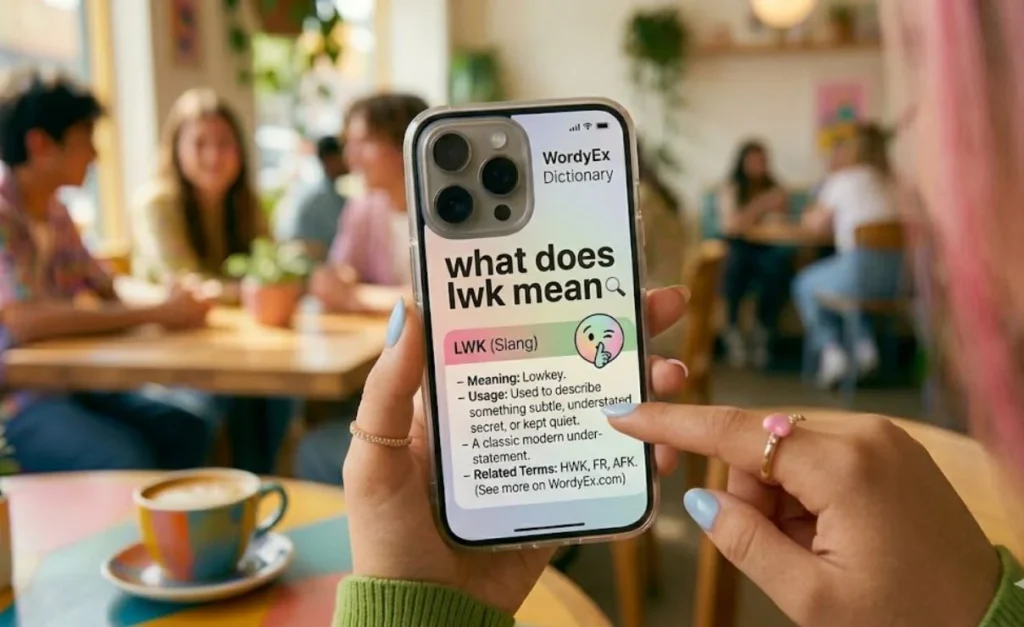
Simply put, LWK stands for “Lowkey.”
It is used to describe a feeling, thought, or situation that is subtle, secret, or understated. It’s the opposite of being “highkey” (extravagant or loud). When someone uses LWK, they are usually admitting to something they aren’t necessarily proud of, or something they want to keep on the “down-low.”
- Example 1: “I lwk want to go to that concert, but I’m supposed to be saving money.”
- Example 2: “That new show is lwk the best thing I’ve seen all year.”
- Example 3: “I’m lwk annoyed that he didn’t text back, but I’ll survive.”
Origin & Background
The term “lowkey” has roots in African American Vernacular English (AAVE), long before it hit the mainstream internet. Historically, it referred to keeping a low profile or staying out of the spotlight. As social media platforms like Twitter (now X) and Instagram became the primary hubs for cultural exchange, the word was shortened for speed and aesthetic.
The transition from “lowkey” to “LWK” happened naturally as mobile typing became the dominant form of communication. It gained massive traction on TikTok, where captions need to be punchy and fast. Today, it isn’t just a word; it’s a cultural marker of Gen Z and Gen Alpha digital fluency. It represents a shift toward “ironic detachment”—the idea that we can care about something deeply while pretending we only care about it a little bit.
Real-Life Conversations
To understand how LWK breathes in the wild, you have to see it in action. Here are a few scenarios where these three letters change the entire mood of the exchange.
WhatsApp (The Casual Confession)
Person A: Are you actually going to the gym today?
Person B: lwk thinking about skipping and getting tacos instead… don’t judge me.
Instagram DMs (The Subtle Flirt)
Person A: Did you see my story from the party?
Person B: lwk obsessed with that outfit. You looked great.
TikTok Comments (The Relatable Moment)
User 1: This video makes me want to dye my hair pink.
User 2 (Creator): lwk been considering it for months now lol.
Text Message (The Work/Stress Vent)
Person A: How’s the project coming along?
Person B: It’s fine, but I’m lwk stressed about the deadline tomorrow.
Emotional & Psychological Meaning
Using LWK is an act of vulnerability-lite. Psychologically, it serves as a “buffer.” By adding LWK to a sentence, the speaker protects their ego. If I say, “I love this song,” and you hate it, I’ve stayed vulnerable. If I say, “I lwk love this song,” and you hate it, I’ve given myself an out—I only lowkey liked it, so it’s not a big deal.
It reveals a modern desire for authenticity filtered through a lens of coolness. We want to share our truths, but we don’t want to seem “pressed” or overly emotional. It’s a way of saying, “This is how I feel, but I’m not letting it consume me.”
A Personal Perspective:
I remember a time when I was helping a colleague with a complex SEO strategy. They sent me a message saying they were “lwk confused” by the new Google guidelines. That “lwk” changed the dynamic from a formal admission of failure to a relatable, human moment of shared frustration. It built a bridge of trust that “I am confused” never could.
Usage in Different Contexts
Social Media
On platforms like TikTok or Instagram, LWK is used to build community. It’s the “if you know, you know” (IYKYK) energy. It’s perfect for captions where you want to appear relatable without trying too hard.
Friends & Relationships
This is where LWK thrives. It’s used for “soft launches” of feelings or admitting to minor social faux pas. In dating, it’s a way to show interest without sounding desperate.
Work / Professional Settings
Proceed with caution. While some modern, tech-forward offices might embrace it in Slack channels, LWK is generally too informal for emails or client presentations. However, in internal “watercooler” chats, it can help humanize a stressful environment.
Casual vs. Serious
LWK is almost always casual. Using it in a serious, grieving, or high-stakes situation can come off as dismissive or immature. Use it when the stakes are low.
When NOT to Use It
While it’s a versatile term, there are moments where LWK just doesn’t fit:
- Professional Emails: “I’m lwk late with the report” will not go over well with a traditional manager.
- Serious Apologies: If you’ve hurt someone’s feelings, saying “I’m lwk sorry” makes the apology feel insincere.
- Formal Documentation: Legal or medical papers should obviously stay far away from internet slang.
- Sensitive Cultural Issues: Using slang while discussing serious global tragedies can appear tone-deaf.
Common Misunderstandings
The biggest mistake people make is thinking LWK means “a little bit.” While that’s part of it, it’s more about the secrecy of the feeling.
- Literal vs. Figurative: Some people think it refers to the volume of something (literal low key in music). In digital slang, it’s purely figurative.
- The “Secret” Factor: If you’re shouting something from the rooftops, you aren’t “lwk” doing it. You’re “highkey” doing it.
- Tone Confusion: Without the right context, LWK can sometimes look like “luck” or “look.” Always ensure the sentence structure makes the meaning clear.
Comparison Table
| Term | Meaning | Vibe | Example |
| LWK | Lowkey / Secretly | Subtle & Chill | “I lwk like him.” |
| HWK | Highkey / Honestly | Loud & Proud | “I hwk hate cold weather.” |
| OTL | Out the Loop | Confused | “I’m OTL on this meme.” |
| FR | For Real | Sincere | “That’s mad fr.” |
Key Insight:
LWK acts as a volume knob for your emotions. It allows you to dial back the intensity of a statement so you can express yourself without feeling over-exposed in a digital space.
Variations & Types of LWK
- LWK Mad: You’re annoyed but staying quiet about it.
- LWK Obsessed: You’ve been rewatching a video 20 times but won’t tell anyone.
- LWK Tired: You’re exhausted but still showing up.
- LWK Hungry: That subtle stomach growl during a meeting.
- LWK Vibe: An atmosphere that feels good but is hard to describe.
- LWK Sad: A lingering melancholy that isn’t a full breakdown.
- LWK Flex: Showing off something cool without bragging.
- LWK Bored: Scrolling through your phone because nothing is sticking.
- LWK Pressed: You’re actually quite upset but pretending to be cool.
- LWK Sus: You have a small feeling that something isn’t right.
How to Respond When Someone Uses It
- Casual: “Haha, I feel that.” or “Same here, honestly.”
- Funny: “Only lwk? I’m highkey feeling that way.”
- Mature: “I appreciate you being honest about that.”
- Respectful: “Totally understand, your secret is safe with me.”
Regional & Cultural Usage
Western Culture
In the US and UK, LWK is ubiquitous in youth culture. It’s a staple of the “digital native” vocabulary, used across all social classes to signal coolness.
Asian & Middle Eastern Culture
While English slang is global, in these regions, LWK is often used by bilingual youth who consume Western media. However, the nuance might shift to be more about “modesty” or “shyness” rather than just “coolness.”
Generational Differences
- Gen Z: Uses it as naturally as breathing.
- Millennials: Might use “lowkey” (full word) more often, but are catching on to the acronym.
- Gen Alpha: Often pairs LWK with other brain-rot slang or highly visual emojis.
For those looking to expand their digital vocabulary beyond just three-letter acronyms, checking out resources like WordyEx can help you stay ahead of the curve in an ever-evolving linguistic landscape.
Is It Safe for Kids?
Yes, LWK is 100% safe. It is not a slur, it’s not vulgar, and it doesn’t have any hidden inappropriate meanings. It’s simply a tool for expression. Parents seeing this in their kids’ texts should see it as a sign that their child is keeping up with modern social trends.
For more information on digital safety and slang, you can check out the Common Sense Media guides for parents.
FAQs
1. Does LWK mean “look”?
No. While it looks similar, LWK almost always stands for “lowkey.”
2. Is it uppercase or lowercase?
In texting, it is almost always written in lowercase (lwk). Uppercase can feel like you’re shouting, which defeats the purpose of being “lowkey.”
3. Can I use it in a professional setting?
Generally, no. Keep it for friends, social media, and casual environments.
4. What is the opposite of LWK?
The opposite is HWK (Highkey), which means you are being loud, obvious, or very intense about something.
5. Why do people use acronyms like this?
Efficiency. Typing “lwk” is faster than “lowkey,” and in the world of fast-scrolling content, every character counts.
6. Is LWK a new word?
The acronym gained popularity around 2020–2021, but the word “lowkey” has been around for decades.
Conclusion
Understanding what LWK means is about more than just decoding an acronym; it’s about understanding the emotional temperature of the room. It’s a word that allows us to be human, to be slightly messy, and to be honest without the fear of being “too much.”
As communication continues to evolve, staying fluent in these digital nuances ensures we don’t just talk at each other, but truly connect. So, next time you’re lwk nervous about trying something new or lwk excited about a small win, don’t be afraid to say it. After all, life is lived in the subtle moments.
Keep exploring, keep learning, and stay confident in your digital voice!